Roofing & Exterior
Vinyl vs. Aluminum Soffit: Which Material Is Right for You?
Vinyl and aluminum are the two most common soffit materials on North American homes. Both protect the underside of your roof overhang, finish the roofline, and can provide attic intake ventilation. The better choice comes down to your climate, the condition of the existing trim, the finish you want, and how much maintenance you are willing to take on—not simply the price per panel.
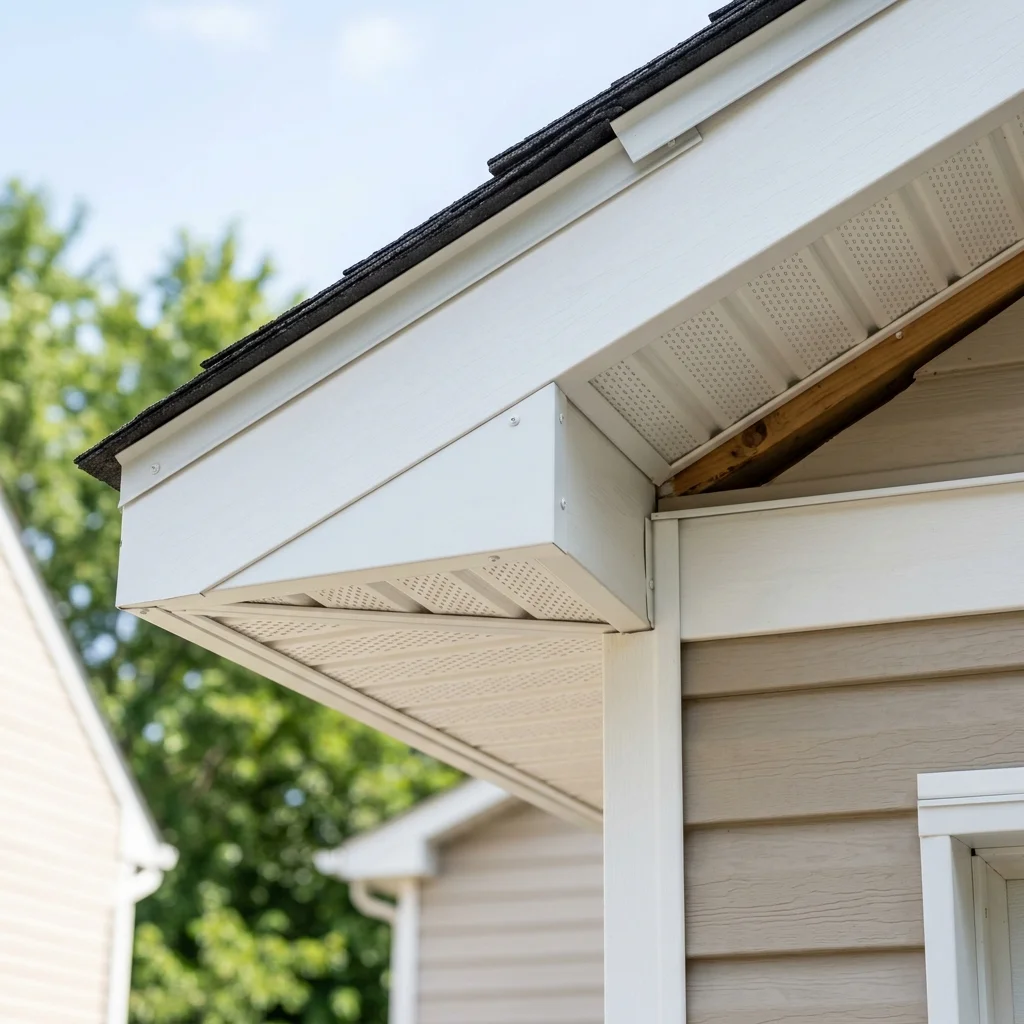
Choose the soffit material that best fits your climate and maintenance preferences.
Vinyl vs. Aluminum Soffit at a Glance
| Factor | Vinyl Soffit | Aluminum Soffit |
|---|---|---|
| Typical material cost | Usually the lower-cost option | Usually costs more than vinyl |
| Durability | Resists rot and corrosion; can crack after impact in severe cold | Rigid and heat-stable; can dent from ladders, hail, or impact |
| Maintenance | Wash as needed; color is integral to the panel | Wash as needed; painted finish may eventually need touch-up |
| Thermal movement | Expands and contracts more, so installation clearance matters | Expands less and holds a flatter, crisper line |
| Ventilation | Available in solid, center-vented, and fully vented panels | Available in solid, center-vented, and fully vented panels |
| Best fit | Budget-conscious replacements and low-maintenance exteriors | Hot climates, long runs, and homes using metal trim systems |
These are broad patterns, not product guarantees. Panel thickness, the quality of the baked-on finish, local exposure, installation method, and the availability of matching trim can matter more than the material label alone. Compare the specifications and warranty for the exact panel system you plan to install.
What Soffit Does for Your Home
Soffit is the finished surface under the eaves—the horizontal area between the exterior wall and the fascia board. It closes a vulnerable part of the roof structure, keeping birds, insects, and wind-driven debris out of the rafter bays. Along with fascia, it gives the roof edge a deliberate, finished look and creates the mounting environment around gutters and drip-edge details.
On many houses, soffit also supplies the intake side of attic ventilation. Outdoor air enters through perforated panels near the eaves, moves upward through open rafter bays, and exits at ridge, roof, or high gable vents. That airflow only works when the openings are unobstructed and balanced with exhaust ventilation. A panel that looks heavily perforated is not automatically adequate; use its published net free area (NFA) and your actual attic dimensions when planning the system.
Cost: The Upfront Price Is Only One Part of the Decision
Vinyl is commonly less expensive to purchase and can make sense when the project is a basic soffit replacement with uncomplicated eaves. It is lightweight, easy to cut, and generally available through home centers and siding suppliers. Material cost can rise when you need matching channels, special colors, long lead times, or a complex roofline with many corners and gable returns.
Aluminum typically carries a higher material price, but its rigidity can make it appealing on a home with long, highly visible eaves. It is also often selected to coordinate with aluminum fascia, gutters, and trim coil. Labor can vary more than the panel price: work at height, rotted wood repairs, gutter removal, unusual overhang depths, and replacing damaged channels all affect the installed total.
Before comparing bids, measure the whole scope. Include eave and rake lengths, overhang width, corner count, panel style, trim channels, fascia, and any repairs behind the existing soffit. Our Soffit & Fascia Calculator turns those dimensions into soffit area, panel counts, J-channel and F-channel estimates, and a planning-level material cost range for either material.
Durability and Climate Performance
Where vinyl performs well
Vinyl does not rot and is not prone to galvanic corrosion, making it a practical low-maintenance option in humid or rainy regions. Its color is molded into the panel, so a scratch typically does not reveal bare metal. Good-quality vinyl panels can provide reliable service for many years when they are not tightly fastened and have room to expand and contract.
The tradeoff is flexibility. Vinyl becomes more brittle in very cold weather, so an impact from a ladder or branch can crack a panel. It also moves more with temperature changes. An installer must leave the prescribed clearance at channels and use the nail slots correctly; fastening panels tightly can cause buckling, waviness, or noise as the material moves.
Where aluminum performs well
Aluminum is more rigid than vinyl and is less affected by day-to-day heat expansion. That makes it a compelling option in sunny climates or on wide, visible rooflines where a straight plane matters. It will not crack from cold in the way vinyl can, and it is non-combustible as a material—although the complete assembly and local wildfire rules still need to be reviewed.
Its vulnerability is denting. A ladder leaned against the edge, falling limbs, or hail can permanently mark thin aluminum panels. Aluminum can also corrode where its coating is damaged or where dissimilar metals and trapped moisture are involved. Use compatible fasteners and follow the manufacturer’s details, particularly near the coast or in areas with heavy salt exposure.
Appearance, Colors, and Matching Existing Trim
Both materials offer solid, center-vented, and fully vented profiles, plus familiar colors such as white, beige, gray, and brown. Vinyl typically has a slightly softer, more textured appearance, while aluminum can provide a cleaner, flatter painted finish. The visual difference is often most noticeable when the panels meet fascia, siding, and gutters.
If you are replacing only the soffit, bring a sample of the existing fascia and siding to the supplier. Whites and grays are not interchangeable across brands, and sun fading can make an exact catalog color look different in place. When a close match is impossible, replacing connected trim components together may create a more intentional result than mixing nearly matched colors.
Ventilation: Choose the Profile, Not Just the Material
The choice between vinyl and aluminum does not determine whether your attic is properly ventilated. The vented profile, its actual NFA rating, the amount of installed soffit, clear airflow above the insulation, and adequate high exhaust all determine performance. Solid soffit may be correct below a porch or other unvented roof area, but it should not replace needed intake under a ventilated attic.
For a typical ventilated attic, soffit intake should be paired with high exhaust such as a ridge vent. Insulation baffles are essential at the eaves: if blown insulation blocks the rafter bays, even a fully vented soffit panel provides little useful intake. For the 1:150 and 1:300 planning rules, intake/exhaust balance, and an NFA checklist, see our attic ventilation requirements guide.
Installation and Maintenance Differences
Both systems rely on properly installed receiving channels. The wall-side edge normally slides into J-channel, while the fascia-side edge is supported by an F-channel or the system-specific trim detail. Panels need straight, secure framing behind them; replacing a failing soffit without correcting loose fascia, decayed rafter tails, or damaged drip edge only hides the problem.
For vinyl, do not drive fasteners tight. The panel must be able to move in the channel. For aluminum, avoid over-fastening and take care while cutting and handling panels so the finish is not scratched. In either material, use corrosion-resistant fasteners and make sure vent perforations remain clear of paint, insulation, and insect screens that have become clogged.
Maintenance is straightforward: rinse off dirt and pollen with a gentle hose stream and soft brush as needed, then inspect after storms. Look for loose panels, staining, dents, crackseling finishes, blocked vents, and gaps where pests could enter. Address water leaks at gutters, flashing, or roof edges promptly; neither vinyl nor aluminum will correct a drainage issue behind the soffit.
How to Choose Between Vinyl and Aluminum Soffit
- Choose vinyl if your priority is a lower initial material cost, corrosion resistance, and simple low-maintenance replacement in a moderate climate.
- Choose aluminum if you want a more rigid panel, have a hot and sunny exposure, or are coordinating new aluminum fascia, gutters, and trim.
- Prioritize the vent rating if you are correcting attic moisture, heat, ice dams, or insufficient intake. Material is secondary to a well-designed ventilation path.
- Replace related components when fascia, channels, drip edge, or gutter attachment areas show damage. This avoids trapping problems behind a new finish.
- Confirm local requirements for coastal conditions, wildfire zones, ventilation, and permitted exterior work before you buy material.
Price and Size Your Soffit Project
Calculate panels, trim, ventilation NFA, and a planning-level cost estimate using your own measurements.
Frequently Asked Questions
Is vinyl or aluminum soffit better?
Neither is better for every home. Vinyl is often the economical, low-maintenance choice; aluminum offers greater rigidity and is a natural match for metal-trim systems. Compare the climate, finish, ventilation profile, and scope of the repair.
Which soffit lasts longer, vinyl or aluminum?
Both can last for decades when installed correctly. Vinyl avoids corrosion but can crack after sharp impacts in severe cold. Aluminum resists cold cracking and stays rigid, but it can dent and its finish needs protection. Site exposure and installation quality have an outsized effect on lifespan.
Can vinyl and aluminum soffit be vented?
Yes. Each is sold in solid, center-vented, and fully vented configurations. Use the manufacturer’s NFA rating and maintain a clear air path above the insulation rather than assuming every vented panel contributes the same airflow.
How do I calculate the amount of soffit material I need?
Multiply the total linear feet of eaves and rakes by the horizontal overhang width, then allow for cuts and waste. Use the Soffit & Fascia Calculator for panel, trim, and ventilation estimates based on your measurements.