Project Planning
When to DIY vs. When to Hire a Pro
Every homeowner eventually faces the same question: should I do this myself or call someone? The answer is never just about money. It involves your skill level, the tools you have access to, the time you can realistically commit, the safety stakes if something goes wrong, and the code and insurance implications if the work isn't done correctly. Getting this decision right consistently — knowing when to pick up a brush yourself and when to pick up the phone — is one of the most valuable skills a homeowner can develop.
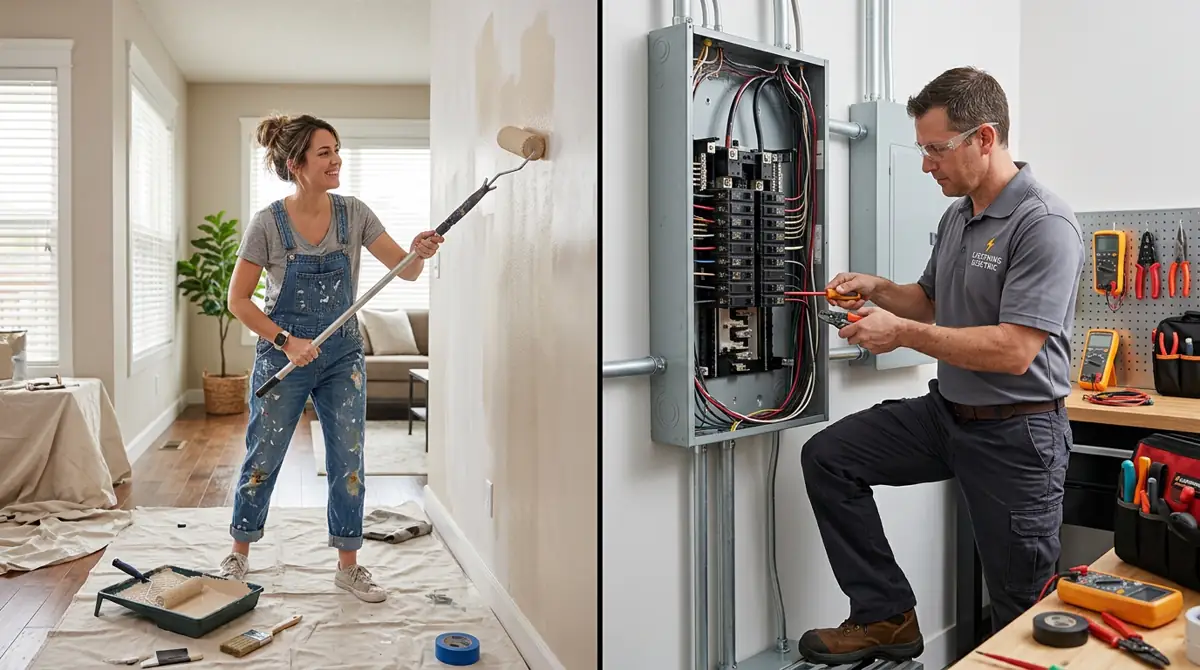
The DIY vs. Pro decision isn't one-size-fits-all. Interior painting is a great DIY project for most homeowners. Electrical panel work is not — regardless of how many YouTube videos you've watched.
Why This Decision Matters Beyond Money
The most common framing of the DIY vs. pro question is: "How much will I save by doing it myself?" That's a legitimate question, but it misses several factors that matter just as much — sometimes more — than the labor cost difference.
Safety is the first one. A wiring mistake can start a fire. A structural modification gone wrong can cause a collapse. A gas line error can be fatal. These aren't hypothetical risks — they're documented outcomes that happen to capable, well-intentioned homeowners who underestimated what a job required.
Resale value and disclosure are the second factor. When you sell your home, unpermitted work must typically be disclosed to buyers. Unpermitted electrical, structural, or plumbing work discovered during a buyer's inspection can kill a transaction, require retroactive permitting (often more expensive than doing it right originally), or become grounds for a price reduction negotiation.
Insurance coverage is the third. Many homeowner's insurance policies exclude coverage for damage caused by unpermitted work or work performed outside the scope of what a licensed professional would be required for. A DIY electrical job that starts a fire — one that would have required a permit — may result in a denied claim.
The Five Questions to Ask Before Starting Any Project
- Does this project require a permit? If yes, a licensed contractor almost always needs to be involved, because the permit is pulled in their name and their license is on the line at inspection. Some jurisdictions allow owner-builder permits, but check your local rules before assuming.
- What happens if I make a mistake? If the answer is "I repaint it" — low stakes, go for it. If the answer is "the wall might not support the floor above" or "I could be electrocuted" — hire a professional.
- Do I have the right tools? Not just any tools — the right ones. Cutting tile without a wet saw, hanging heavy cabinets without a stud finder, or running wire without a fish tape are recipes for poor results even if your skill level is adequate.
- Do I have enough time to do it properly? A rushed DIY job is often worse than a professional job for a simple reason: pros have done this task hundreds of times and know exactly how long each step takes. A homeowner doing a task for the first time typically underestimates time by 2x to 3x. A half-finished bathroom or an unpatched drywall hole while you wait to have time on the weekend is its own kind of problem.
- Has my skill level been tested on something similar? There's a meaningful difference between "I've watched a lot of tutorials" and "I've successfully completed a comparable project before." Be honest about where you are on that spectrum.
Projects That Are Genuinely Good DIY Opportunities
These are tasks where a patient, capable homeowner can realistically match or approach professional quality with the right preparation:
? Strong DIY Candidates
- Interior painting (walls, trim, ceilings)
- Floating floor installation (laminate, LVP, engineered hardwood)
- Tile backsplash installation
- Basic landscaping and garden bed work
- Installing pre-hung interior doors
- Replacing light fixtures and switches (on existing circuits)
- Caulking, weatherstripping, and door sweep installation
- Deck staining and sealing
- Cabinet hardware and faucet replacement
- Drywall patching (small holes and cracks)
- Insulation installation in accessible attic areas
- Fence repair and post replacement
? Always Hire a Pro
- Electrical panel upgrades and new circuit runs
- Structural wall removal or modification
- Main plumbing stack and sewer line work
- Roof replacement (shingles, decking)
- HVAC system installation or major repair
- Gas line installation or modification
- Foundation repair
- Asbestos or lead paint remediation
- High-voltage or service entrance work
- Structural concrete (foundations, retaining walls over 4 ft)
The Middle Ground: Projects That Depend on Your Skill Level
Many home improvement tasks fall into a grey zone where the right answer genuinely depends on your experience and honest self-assessment. These aren't automatically DIY — but they're not automatically out of reach either.
| Project | DIY if... | Hire a pro if... |
|---|---|---|
| Bathroom tile installation | You've tiled before and have proper tools (wet saw, level, spacers) | It's your first tile job, involves a shower floor, or the substrate is questionable |
| Deck building | Under 30" off grade, basic rectangular design, comfortable with structural lumber and fasteners | Second-story, attached to house framing, complex design, or permit-required in your jurisdiction |
| Drywall installation | Small rooms, repairs, or you've done it before and are okay with tape and mud skill development | Large areas, textured finishes, ceilings, or tight deadlines |
| Toilet replacement | Straightforward swap of same-size toilet on existing flange in good condition | Flange is damaged, relocation is needed, or there are signs of subfloor water damage |
| Exterior painting | Single-story, good condition surface, comfortable on a ladder | Two-story or higher, significant prep work (scraping, priming), lead paint likely |
| Simple plumbing (faucets, supply lines) | Fixture replacement with shutoffs in good working condition | No shutoff available, involves soldering copper, or drain line work beyond the trap |
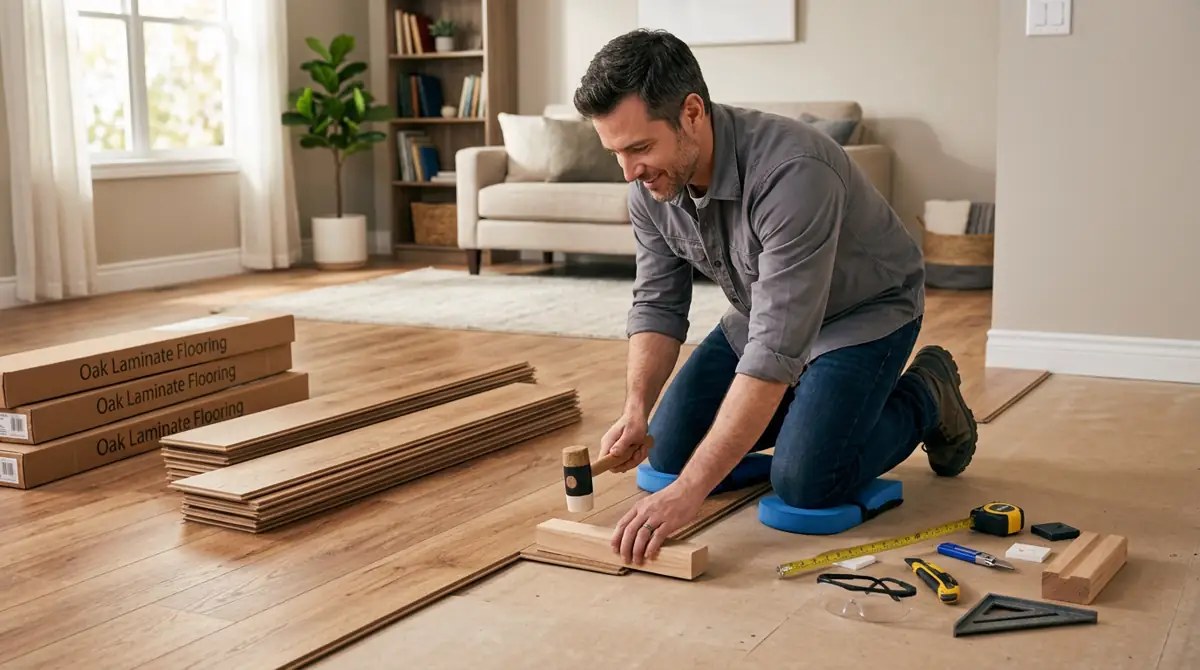
Floating floor installation is one of the best beginner DIY projects — forgiving, tool requirements are modest, and the result is immediately gratifying. Most homeowners can complete a room in a weekend.
The Real Cost of DIY: Accounting for Hidden Factors
DIY saves money on labor — that's real. But the true cost equation includes factors that don't show up in the simple "labor savings" calculation:
Tool investment
A quality tile saw costs $150–$400. A decent miter saw runs $200–$500. A laser level, a nail gun, a drain snake — these add up. If you're doing a one-time project and don't already own the tools, factor their cost into the DIY calculation. Rental is an option for large or specialized equipment, but rental logistics can slow down a project significantly.
Time cost
If your weekend time has meaningful alternative value — in income, rest, or family time — the labor "savings" from DIY have a real opportunity cost. A professional crew that completes a project in two days might take you three or four weekends to match. That time has value.
Mistake cost
Mistakes are part of learning any new skill. Some are minor — a piece of trim that needs to be recut, a wall section that needs repainting. Others are expensive — cracked tile from wrong installation technique, a door that won't close properly because the rough opening isn't plumb, or drywall that needs to be replaced because the tape work wasn't done correctly. Budget mentally for some rework on any first-time project.
Material waste
Experienced contractors cut efficiently with minimal waste. First-time installers typically use 10–20% more material than a professional would on the same job. Order extra (10–15% overage is the standard recommendation), but account for this in the material cost estimate.
When DIY Actually Costs More Than Hiring a Pro
It happens more than homeowners expect. The scenarios where DIY ends up costing more than hiring out:
- Projects that require a permit and fail inspection — remediation can be significantly more expensive than doing it to code from the start.
- Mistakes that damage adjacent finished work — a tile job that cracks the subfloor, a paint job that gets onto hardwood floors, a plumbing repair that leaks and causes water damage.
- Projects that are abandoned mid-way — a half-tiled bathroom or an exposed wall with rough electrical work sitting open for months while you find the time and motivation to finish is both a quality-of-life and a potential safety issue.
- Work that needs to be redone before sale — amateur finish work that looked acceptable to you may not pass a buyer's inspector. Hiring a pro to fix it before listing often costs more than the original professional job would have.
Making the Decision: A Simple Framework
Here's how to think through any specific project quickly:
- Is it a licensed trade (electrical, plumbing, structural, HVAC, gas)? ? Hire a pro unless the specific task is basic fixture swap.
- Does it require a permit? ? Hire a licensed contractor or verify owner-builder rules in your jurisdiction.
- Is a mistake irreversible or dangerous? ? Hire a pro.
- Have you done something similar before with a good result? ? Likely a good DIY candidate.
- Do you have the tools and the time? ? If both yes, assess your skill level honestly and proceed carefully.
- None of the above concerns apply? ? Strong DIY candidate — go for it.
The Permit Question: Never Skip It
The most common rationalization for skipping permits is: "Nobody will know." The problem is that people do find out — during a home sale inspection, after a claim with your insurance company, or when a neighbor reports unpermitted construction. The consequences of unpermitted work are real and can be severe:
- Your homeowner's insurance may deny claims related to unpermitted work
- Buyers can negotiate a significant price reduction or walk away when unpermitted work is discovered
- The building department can require demolition and rebuild at your expense
- Retroactive permitting (permitting work after it's done) is often more expensive and more invasive than a standard permit, since inspectors may require opening finished walls to inspect what's behind them
The permit process exists to protect you, not just the public. An inspection by a licensed building official is an independent quality check on the work — whether done by a contractor or by you as an owner-builder.
Plan Your Project with Accurate Estimates
Whether you're DIYing or hiring out, start with solid numbers. Our free calculators give you material quantities and cost ranges before you commit.
Frequently Asked Questions
What home improvement projects can I do myself?
Painting, flooring installation, basic landscaping, tile backsplashes, caulking, weatherstripping, fixture swaps on existing circuits, pre-hung door installation, and deck staining are all reasonable DIY projects for a patient homeowner with basic tool skills. The key is honest self-assessment and not skipping steps to save time.
What projects should never be DIY?
Electrical panel work, new circuit installation, structural wall modifications, main plumbing and sewer work, roof replacement, HVAC installation, gas line work, foundation repair, and any hazardous material remediation (asbestos, lead paint) should always go to a licensed professional.
Does DIY always save money?
Not always. Tool investment, material waste from inexperience, time cost, and the expense of fixing mistakes can erode or eliminate the labor savings. For first-time tasks, the savings are often smaller than expected. For repeat projects where you have the tools and skill, DIY savings are real and can be substantial.
What happens if I do unpermitted work?
Unpermitted work can affect your insurance coverage, complicate or kill a home sale, require expensive retroactive permitting or demolition, and create personal liability if the work causes injury or damage. The permit process exists to protect you — skipping it creates more risk than it eliminates.