Plumbing & Utilities
Septic Tank Pumping Schedule & Cost: How Often and How Much
Most household septic tanks need pumping every three to five years, but your household may need a shorter interval. This guide explains how tank size, the number of people at home, water use, and a garbage disposal affect the schedule—plus what a pumping visit and inspection typically cost.
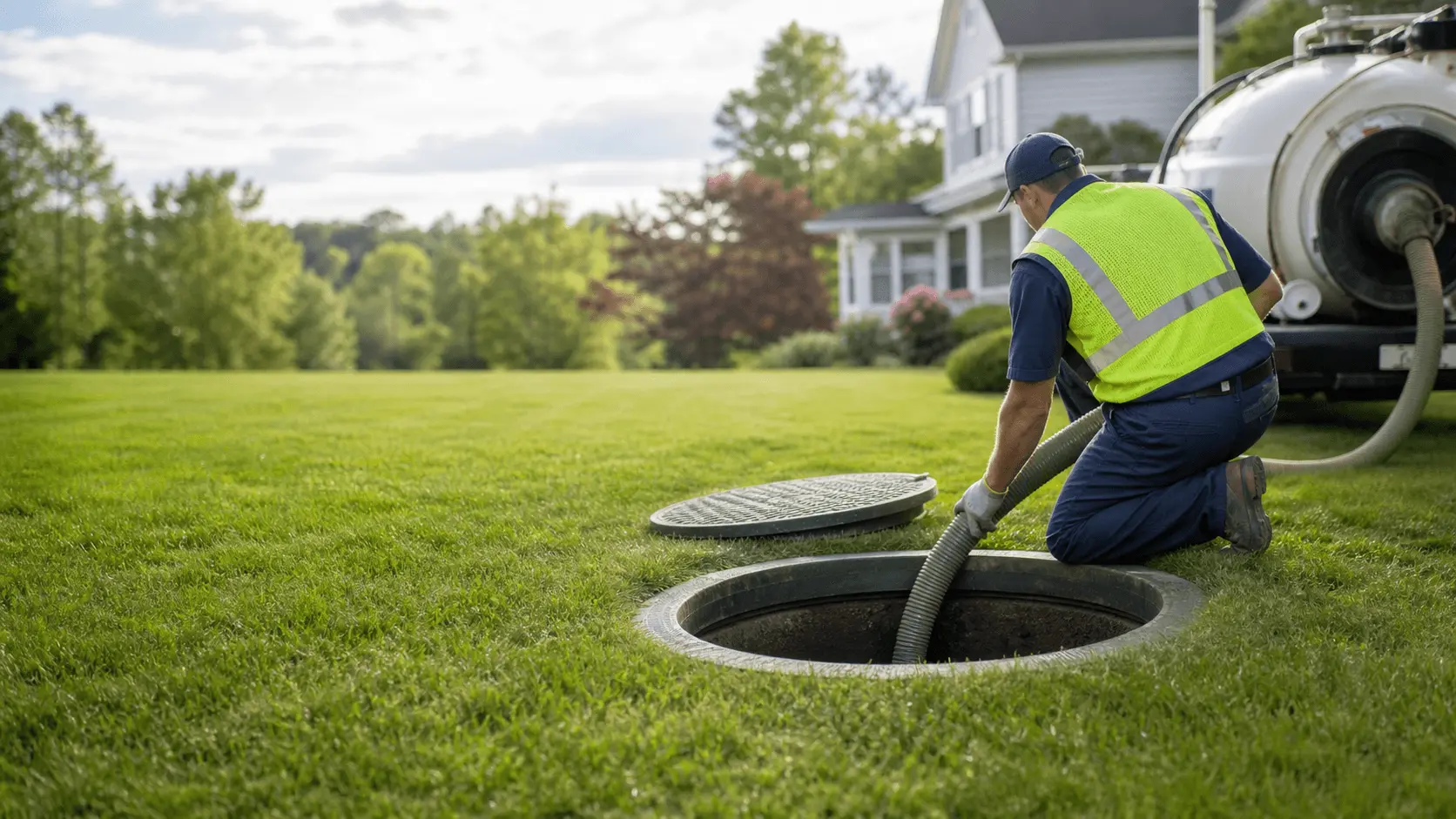
Regular service removes accumulated solids before they can reach and damage the drain field.
How Often Should You Pump a Septic Tank?
The U.S. Environmental Protection Agency says the average household septic system should be inspected at least every three years by a septic service professional, and that household tanks are typically pumped every three to five years. That range is a useful starting point—not a maintenance pass for five years regardless of what happens in the home.
A septic tank separates wastewater into three layers: floating scum, clarified liquid, and settled sludge. Baffles and tees keep the scum and solids in the tank while liquid moves to the drain field. Over time, however, the solids take up more of the tank's working volume. If they reach the outlet, they can clog pipes and soil, turning a routine pumping bill into a major repair.
During service, the contractor should check the tank condition and measure the scum and sludge layers. EPA guidance calls for pumping when the bottom of the scum layer is within six inches of the outlet bottom, when the top of the sludge layer is within 12 inches of the outlet, or when sludge and scum together take up more than 25% of the liquid depth. Those measurements matter more than a generic online timetable.
Septic Tank Pumping Schedule by Household Size
More people usually means more wastewater and more solids. Tank capacity creates a buffer, but it does not erase the effect of household use. The planning intervals below assume ordinary indoor water use and no unusual solids load. They are intentionally conservative; follow the recommendation recorded by the professional who inspects your system.
| Tank size | Household size | Planning interval | Why it may change |
|---|---|---|---|
| 750 gallons | 1–2 people | About 3–4 years | Small tanks have less reserve volume; local rules may limit their residential use. |
| 1,000 gallons | 1–2 people | About 4–5 years | Heavy water use, guests, or a disposal can shorten the interval. |
| 1,000 gallons | 3–4 people | About 2–3 years | This is the common answer for a family of four using a typical tank. |
| 1,000 gallons | 5–6 people | About 1–2 years | High occupancy fills the available solids storage more quickly. |
| 1,250–1,500 gallons | 4–6 people | About 3–4 years | Capacity helps, but do not delay an inspection because the tank is larger. |
Planning ranges only. Actual accumulation varies with wastewater volume, the amount of solids entering the tank, local rules, and the condition of the system.
Want a tailored planning estimate? Our septic tank calculator uses your bedroom count, actual occupants, soil type, and garbage-disposal use to estimate tank capacity, drain-field area, and a pumping interval. It is useful for organizing your maintenance records, but it does not replace an on-site inspection.
What Changes Your Pumping Frequency?
Tank capacity and actual occupancy
Tank size is often set by bedroom count and local code, but the pumping schedule should reflect how many people actually live in the home. A two-person household in a 1,000-gallon tank may have a longer interval than a six-person household with the same tank. If occupancy changes for more than a few months, move the next inspection forward rather than waiting for the old calendar date.
Water use and leaks
All indoor water ultimately enters the septic system. High-efficiency fixtures and spreading laundry across the week can reduce hydraulic stress on the tank and drain field. A silent running toilet is especially costly: EPA notes that one can add as much as 200 gallons of water a day. Pumping removes solids, but it will not solve a leak or a saturated drain field, so repair leaks promptly.
Garbage disposals and what goes down the drain
Food waste adds solids and can shorten the schedule. EPA advises homeowners to limit or eliminate garbage-disposal use with a septic system because fats, grease, and food solids accumulate as scum and sludge. Never use the toilet as a trash can: wipes, paper towels, floss, diapers, coffee grounds, grease, and household chemicals do not belong in the system. If you use a disposal regularly, tell the pumping company and plan on more frequent checks.
Alternative treatment systems
Systems with pumps, alarms, aerators, or electrical float switches need closer attention. EPA says alternative systems should generally be inspected annually, because they contain mechanical parts. Your service agreementrmit, and local health department may set a stricter schedule. Do not wait for an alarm to think about maintenance.
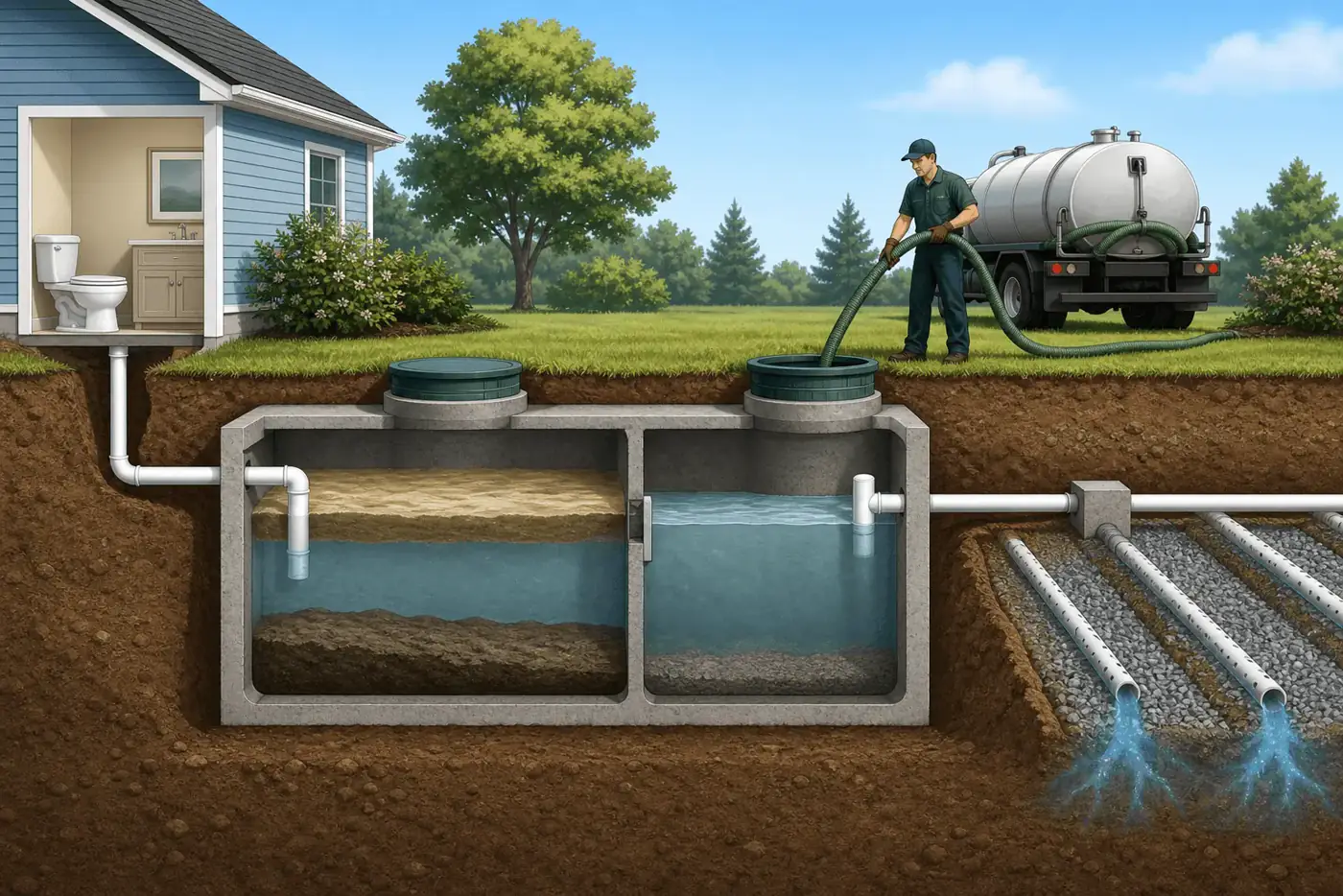
Pumping protects the tank's outlet and the drain field by keeping accumulated solids inside the tank.
How Much Does It Cost to Pump a Septic Tank?
For a routine residential appointment, septic tank pumping commonly costs about $300 to $700. Many straightforward jobs land in the middle of that range, but a quote is the only reliable price for your property. The cost usually includes locating accessible lids, opening the tank, pumping, a visual check of the tank components, and legal disposal of the waste. Ask what is included before booking so a low headline price does not become a surprise invoice.
Routine pumping
$300–$700
Typical residential service with accessible lids and a standard truck setup.
Basic inspection
$100–$300
May be bundled with pumping; standalone visits vary by area and scope.
Locating or digging lids
$100+
Extra labor may apply when the company must find or excavate buried access covers.
Comprehensive sale inspection
$300–$600+
May include records review, component locating, camera work, or a hydraulic test.
Prices rise with a larger or unusually deep tank, long hose runs, difficult truck access, extra compartments, emergency or weekend service, regional disposal fees, and repair findings. A tank that is overdue can also cost more if lids are hard to reach or the contractor needs additional time to investigate a backup. Pumping itself is not the same as septic-system replacement: a damaged baffle, cracked tank, failed pump, or drain-field problem is a separate repair.
How Much Does a Septic Tank Inspection Cost?
A simple maintenance inspection is often included with pumping, or it may cost roughly $100 to $300 as a separate visit. The inspector looks for leaks, checks baffles and tees, measures the solids layers, and notes the tank's condition. Keep that service report with your permit and previous pumping receipts; it gives the next contractor a far better maintenance history than a guessed date.
A real-estate inspection or a detailed system evaluation can cost more, commonly around $300 to $600 or more. It may require the contractor to locate buried components, review permits, inspect a pump or alarm, use a camera, or perform a hydraulic load test. If you are buying a home, confirm exactly what the inspection covers. A visual look at one tank lid is not always a full assessment of the tank, distribution components, and drain field.
What Happens During a Pumping Appointment?
A good appointment is more than placing a hose in a lid. The technician should locate and open the appropriate access covers, inspect the inlet and outlet fittings, check visible tank condition, measure solids, remove the contents, and leave a written record. Ask the technician to show you the outlet tee or effluent filter if it is accessible and to explain any maintenance needs in plain language.
Never enter a septic tank or lean into an opening. Septic gases can be dangerous, and the tank is a confined space that requires specialized safety equipment. Keep children and pets away from uncovered lids and do not drive over the tank or drain field. After service, make sure lids are closed and secure.
Signs You Should Call Sooner
Do not wait for the usual schedule if toilets drain slowly, sewage backs up, fixtures gurgle, an alarm sounds, wastewater appears on the lawn, or you notice a persistent sewage odor. These signs can point to a full tank, a plumbing blockage, a pump issue, or a drain-field malfunction. Pumping may be part of the solution, but a qualified professional should diagnose the source instead of assuming the tank is the only issue.
Estimate your pumping interval
Use your actual household size, bedrooms, soil type, and disposal use to get a planning-level maintenance estimate alongside tank and drain-field guidance.
Frequently Asked Questions
How often should a septic tank be pumped for a family of four?
A family of four with a 1,000-gallon tank often needs pumping every two to three years. Start with a professional inspection and use the measured scum and sludge levels to confirm the interval. A disposal, heavy laundry use, frequent guests, or a smaller tank can mean service is needed sooner.
Can I wait until my septic tank is full?
No. The goal is to pump before solids can escape through the outlet and harm the drain field. A septic tank always contains liquid; waiting for a backup or a visibly "full" tank risks expensive damage and is not a maintenance strategy.
Does pumping a septic tank hurt the bacteria?
Routine pumping is normal, necessary maintenance. Septic systems do not need additives to function properly. Healthy bacteria re-establish from ordinary wastewater after service; do not substitute additives for regular pumping and inspection.
Should I pump before selling my home?
It can be sensible, but first follow the buyer's requirements, your local rules, and the inspector's scope. A documented pumping and comprehensive inspection can give both parties useful information, but pumping alone does not guarantee that the drain field and every component are defect-free.