Home Construction & Design
CMU Home Addition or Moving? How to Compare the Costs
Compare an addition and a move using costs from your own bids and loan estimates. Then check what a concrete block addition would require on your site.
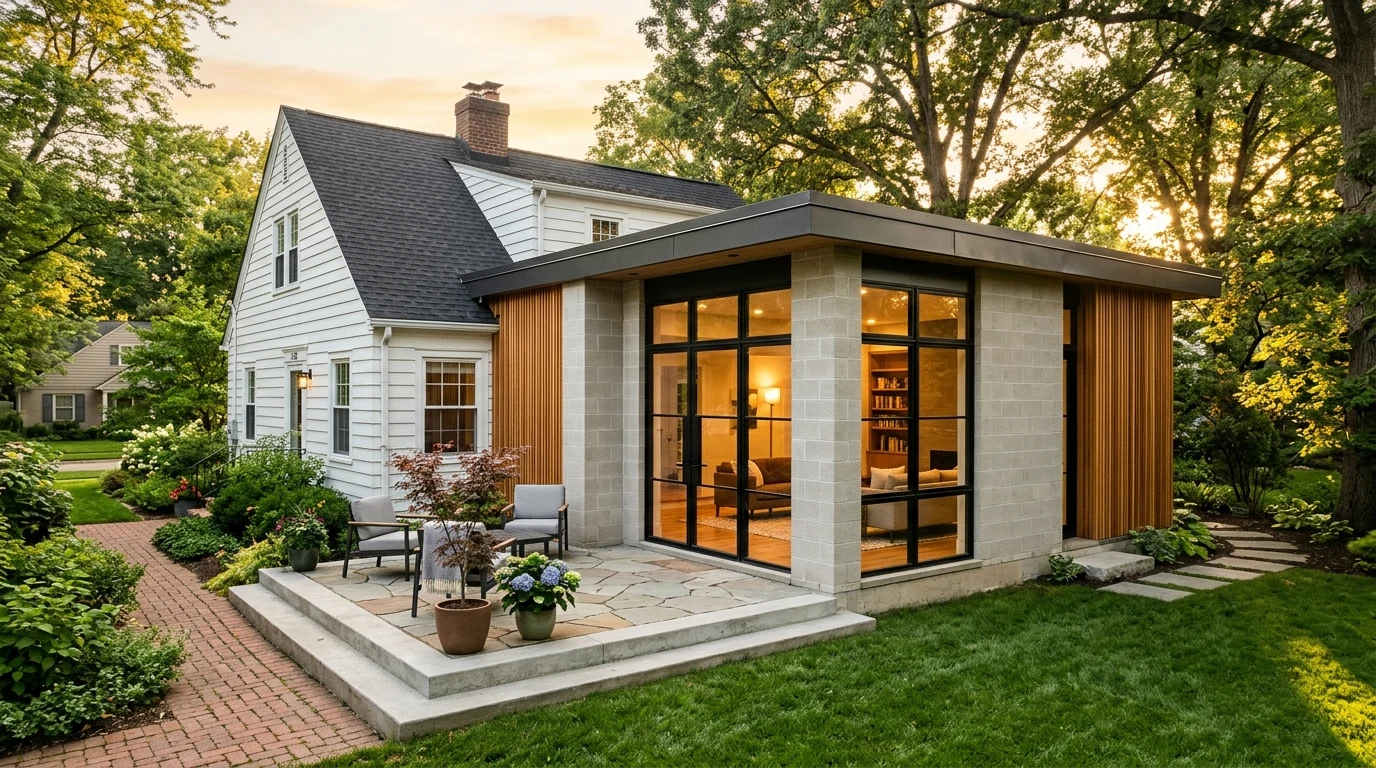
More Americans are investing in additions and expansions rather than selling and moving — and concrete block is one of the most durable, cost-effective ways to build permanent new space.
Compare adding on with moving
Write down which room, accessibility feature or household need is missing. Price the smallest addition that meets it, then compare that scope with the move. For the move, use the actual loan amount, monthly principal and interest, insurance, taxes and cash to close. The CFPB Loan Estimate explainer shows where these figures appear. Include any repair costs and changes to commuting or other recurring expenses.
Check whether CMU fits the house and the site
Ask the designer to show how the new foundation meets the existing house and how the wall and roof manage water. Compare the complete wall assemblies, including specified reinforcement, grout, insulation, exterior finish, interior finish and openings. The owner still needs to confirm zoning, setbacks, utility capacity and whether the work affects a septic permit.
Worked scope and budget example
Consider a one-room addition with a sample written construction quote of $80,000. If the quote excludes $8,000 for design and permits and you set aside $12,000 for contingency, the working budget is $100,000. Record which costs remain allowances and whether temporary living arrangements or financing add to the total. Replace all sample amounts with your written bids and loan terms.
For a masonry takeoff from approved drawings, use the CMU & Cinder Block Calculator. CMHA’s masonry design and construction manual explains nominal modules and the coordination needed around openings.