Drainage & Sitework
French Drain Cost, Design & Installation Guide (2026)
A French drain is one of those projects that looks simple from the surface: a trench, some stone, a pipe, and a new patch of lawn. The details decide whether it quietly protects your home for decades or becomes an expensive gravel-filled ditch. Before you buy pipe, make sure you know where the water starts, where it will finish, and whether gravity can carry it there.
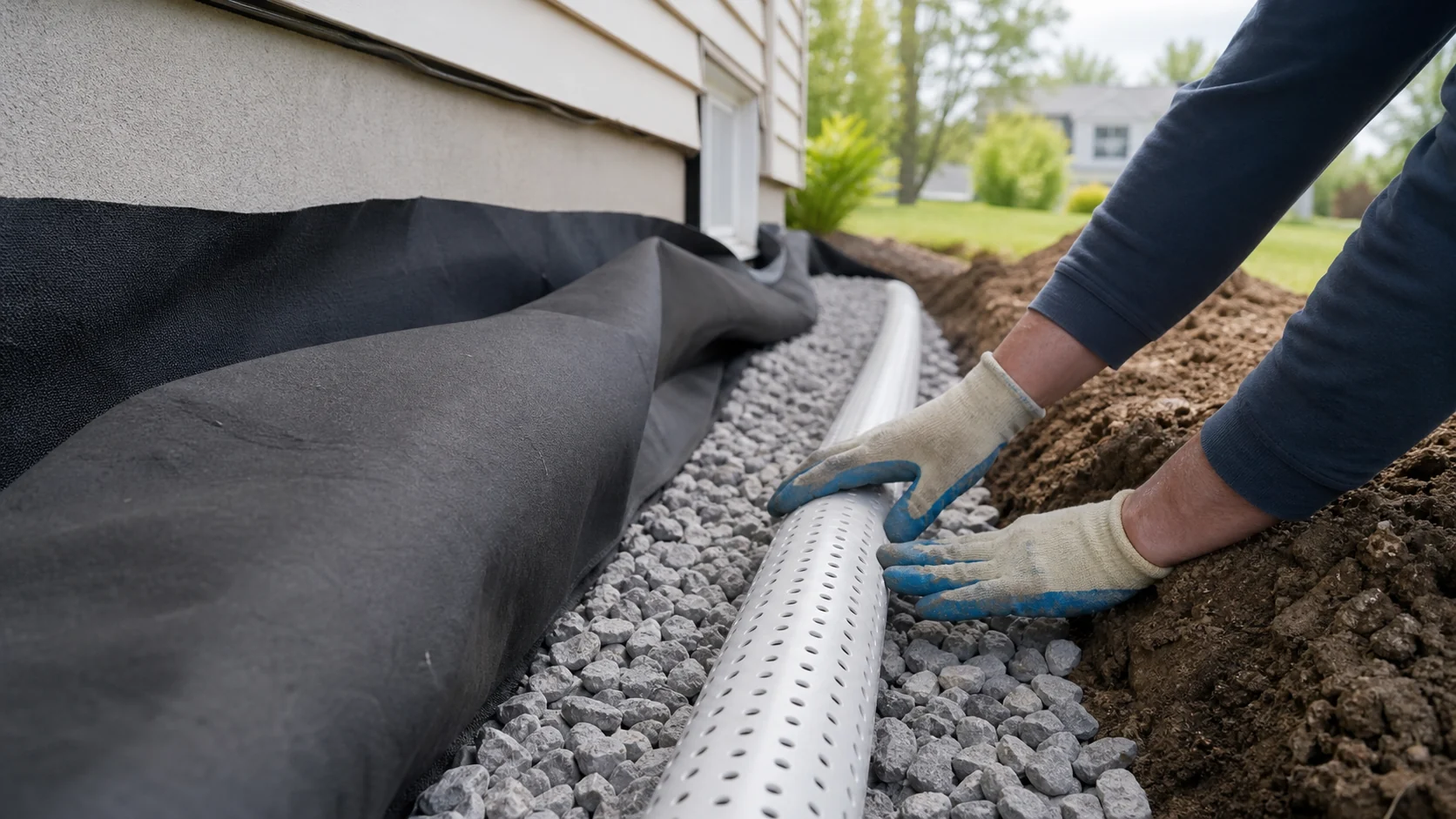
A foundation French drain uses washed stone, filter fabric, and perforated pipe to collect subsurface water and route it to a legal discharge point.
What a French drain does—and what it does not
A French drain is a gravel-filled trench with a perforated pipe near its bottom. Water in saturated soil enters the stone, reaches the pipe, and flows downhill to a discharge point. It is useful when water lingers along a foundation, a retaining wall stays wet, a low yard never dries, or runoff needs a controlled underground route.
It is not a universal cure for water problems. A drain cannot overcome a roof that pours water beside the foundation, a yard that slopes toward the house, or a discharge point with nowhere safe to send water. Start with the easy fixes: clean gutters, extend downspouts, and correct obvious surface grading. A French drain earns its cost when groundwater or persistent subsurface water remains after those basics are handled.
Start with the water path, not the trench
The most important design decision is the outlet. Water must leave the system without harming your home, a neighbor’s property, a septic field, or public infrastructure. Depending on local rules and site conditions, that may be a daylight outlet on a downhill part of your lot, a pop-up emitter, a dry well sized for the soil, or a permitted storm connection. Call 811 before digging and ask your local building or stormwater authority about discharge restrictions.
Walk the property during or immediately after rain. Mark where water enters, where it ponds, and the lowest practical exit. If the proposed outlet is higher than the problem area, gravity drainage is not possible without a basin and pump. That is the moment to pause and redesign—not after the trench is open.
French drain cost: what changes the price
| Cost driver | Why it matters | Planning implication |
|---|---|---|
| Depth and length | More excavation, stone, fabric, pipe, and restoration | Measure the actual route before requesting bids. |
| Soil and access | Clay, rock, roots, fences, and tight side yards slow excavation | Hand digging and machine access can change the total dramatically. |
| Discharge method | An outlet, dry well, basin, or pump each has different materials and labor | Price the complete system, not just the trench. |
| Foundation depth | Deep drains require careful excavation and waterproofing work | Get an experienced drainage or foundation contractor involved. |
| Landscape restoration | Sod, mulch beds, concrete, and pavers must be restored afterward | Ask whether restoration is included in writing. |
For a straightforward 60-foot yard drain, a simple material allowance might include 70 feet of 4-inch perforated pipe, 2–3 cubic yards of washed stone, nonwoven filter fabric, fittings, and an emitter. A deeper foundation installation needs more excavation and often more waterproofing or protection-board work; it should not be compared directly with a shallow landscape drain.
Design the slope before you order materials
Drain pipe does not need a dramatic fall, but it does need consistent fall. A practical target is at least 1% slope: one foot of drop for every 100 feet of run. On a 60-foot drain, that is about 7.2 inches of total fall. More fall is fine if it does not make the trench too shallow at the high end or cause erosion at the outlet.
Use solid pipe after the collection section if you need to carry water across an area where you do not want to collect more water. Use perforated pipe in the gravel zone where collection is the goal. The perforations should face down for standard corrugated pipe systems so water can rise into the pipe from the stone bed; follow the pipe manufacturer’s instructions for the product you buy.
Materials that make a drain last
- Perforated 4-inch pipe: usually sufficient for a typical residential collection run. Use rigid PVC where precise slope and durability are priorities; quality corrugated pipe can work when installed carefully.
- Washed angular stone: clean ¾-inch drainage stone creates open voids for water. Avoid fines-heavy base material, which can restrict flow.
- Nonwoven geotextile fabric: wraps the stone envelope and slows soil migration into it. It is not optional in silty or clay soil.
- Solid outlet pipe and fittings: carry collected water to the discharge without drawing in more soil water.
- Cleanouts: vertical capped risers at accessible points make future flushing possible.
Installation sequence: the part that prevents callbacks
- Mark utilities and set the discharge. Call 811, confirm the outlet is permitted and lower than the collection zone, then stake the route.
- Excavate to a consistent grade. Check the trench bottom often with a laser, string line, or long level. A wavy trench makes a wavy pipe—and standing water.
- Line the trench with fabric. Leave enough width to overlap the stone completely at the top.
- Add bedding stone and place pipe. Set the pipe on a uniform stone bed. Do not lay it directly on clay or loose soil.
- Test the route before backfill. Run water through the system and confirm it reaches the outlet freely.
- Cover with stone and wrap fabric. Keep enough stone above the pipe to form a continuous drainage envelope, then fold fabric over it without gaps.
- Restore grade thoughtfully. Replace soil and sod while maintaining positive slope away from the home.
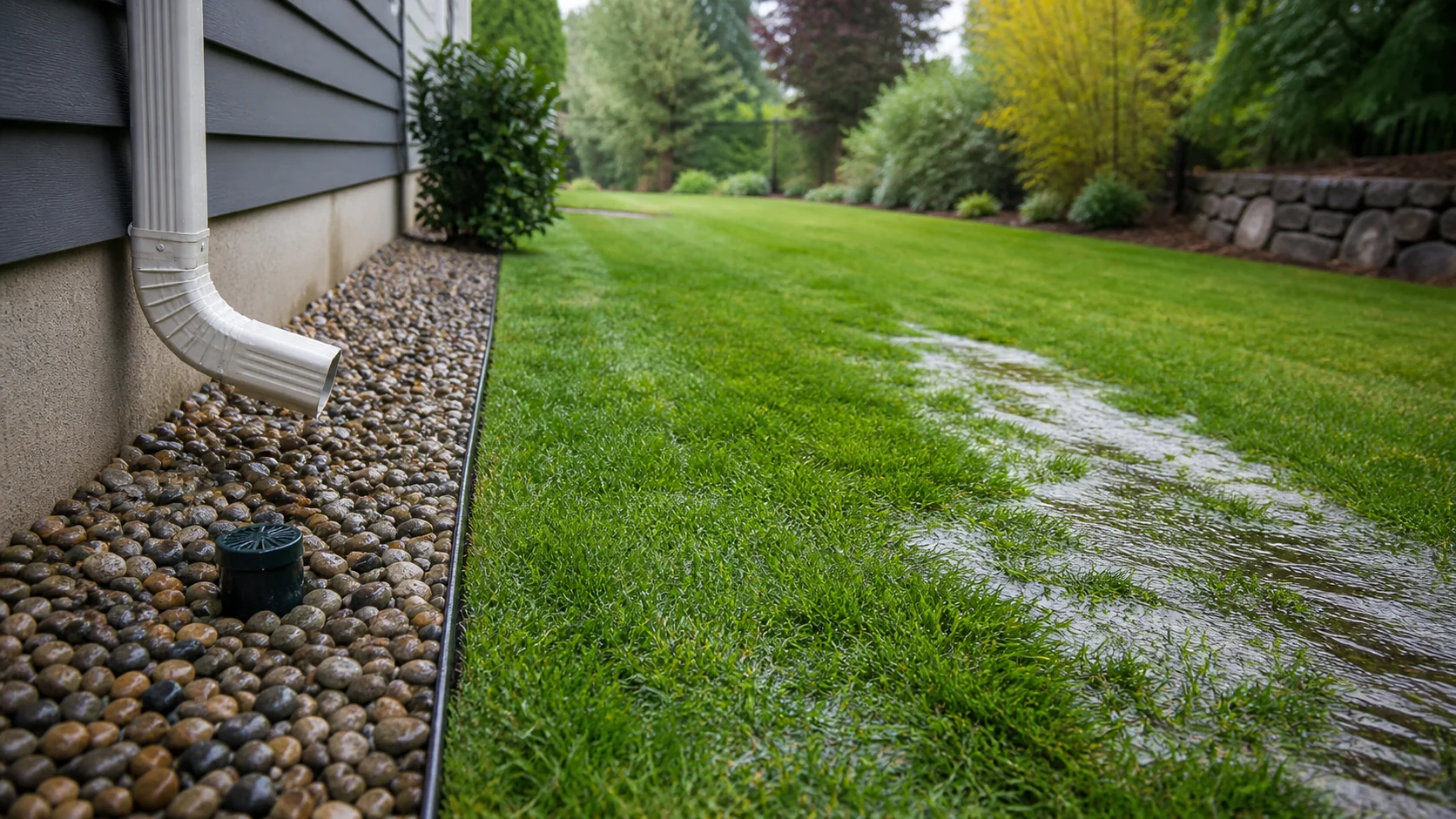
A visible, serviceable discharge point is easier to inspect than a pipe that ends underground with no proven path for water.
Common French drain mistakes
The classic mistake is using a perforated pipe all the way to the outlet. That can let water escape or soil enter where you want a sealed transport line. Other frequent failures are flat sections that hold sediment, fabric omitted from clay soil, pipe buried in soil without a stone envelope, and an outlet that is blocked by mulch or frozen turf.
Another mistake is placing a deep drain alongside a foundation without understanding the footing elevation. Excavating below or too close to a footing can undermine soil support and create a structural problem. When the work approaches foundation depth, retaining walls, septic components, or steep slopes, hire a qualified drainage contractor and obtain engineering advice if needed.
When to DIY and when to hire a pro
A shallow yard drain with a clear downhill outlet is a realistic DIY project for a homeowner who can work safely around utilities and operate or rent excavation equipment. Bring in a professional for a foundation drain, a system requiring a pump, a site with rock or unstable soil, a drain near a retaining wall, or any project that crosses hardscape. The savings from self-installation disappear quickly if a new patio, fence, or footing needs repair afterward.
Plan the related sitework
Use the Drain Field Calculator for a preliminary site-planning estimate, then confirm final drainage design with local requirements.
French drain FAQ
How deep should a French drain be?
Depth depends on what you are collecting. A shallow yard drain may be 18–24 inches deep, while a foundation system is designed relative to the footing and should be handled carefully by a qualified installer. The pipe needs room for stone below and above it, plus finished grade restoration.
How long does a French drain last?
A properly sloped, fabric-wrapped stone system can last for decades. Its lifespan drops when silt enters through missing fabric, the outlet stays blocked, or the system has no cleanouts for maintenance.
Can I connect gutter downspouts to a French drain?
Often yes, but a downspout carries a high volume of roof water. Use solid pipe to transport that water and confirm the outlet can handle it. Do not dump roof water beside the foundation into a small, shallow drain.