Construction Technology
Masonry Robots: How to Compare Block-Laying Speeds
Compare manufacturer-reported block-laying speeds with the time and work included in a contractor’s quote.
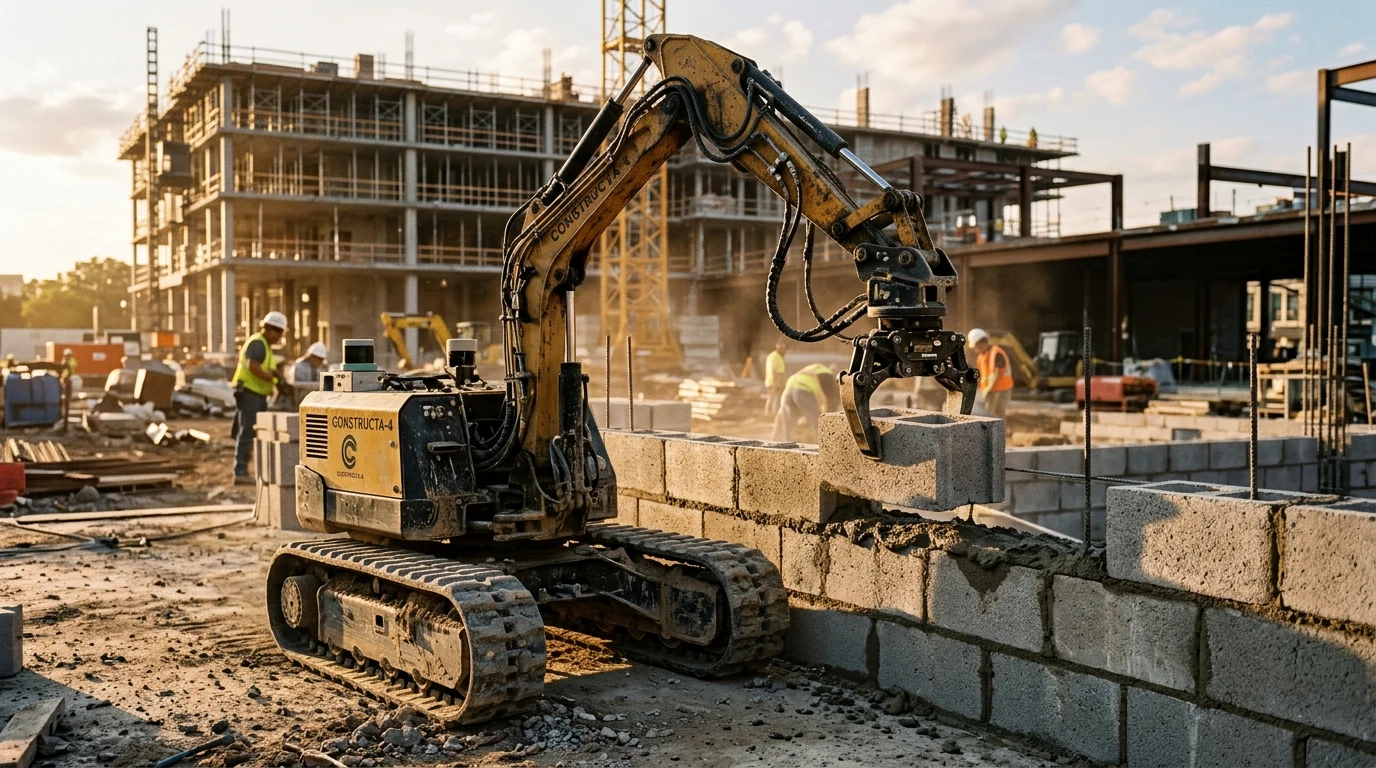
Modern masonry robots can place concrete blocks with millimeter-level precision — something that takes a skilled mason years to master.
What the manufacturer measured
In a 2023 U.S.-format block trial announcement, FBR reported an average above 240 blocks per hour across a test structure. In its 2020 annual report, FBR reported about 174 blocks per hour during uptime on a community-centre project in Western Australia. These company-reported figures cover different formats and measurement windows.
How to compare two bids
Ask for completed wall area per shift and installed price for the same drawing. Check whether the schedule includes layout, staging, machine setup, reinforcement, openings, inspection and cleanup.
For example, 1,200 blocks at 240 per hour would take five hours of placement at that sustained rate. Three more hours of setup and staging bring the average to 150 blocks per hour over eight hours. Use the same time basis for each bid.