Foundation & Waterproofing
Basement Waterproofing Cost: Interior vs. Exterior Methods Explained
Water in the basement is one of those problems that homeowners love to ignore until they absolutely can't anymore. Maybe you've noticed a damp smell after heavy rain, a white chalky residue on the walls, or actual puddles forming in the corner. Whatever the severity, one thing is certain: water intrusion doesn't get better on its own. It gets worse. And the longer you wait, the more expensive it becomes. This guide breaks down exactly what basement waterproofing costs in 2026, what the different methods actually do, and how to decide which approach makes sense for your situation.
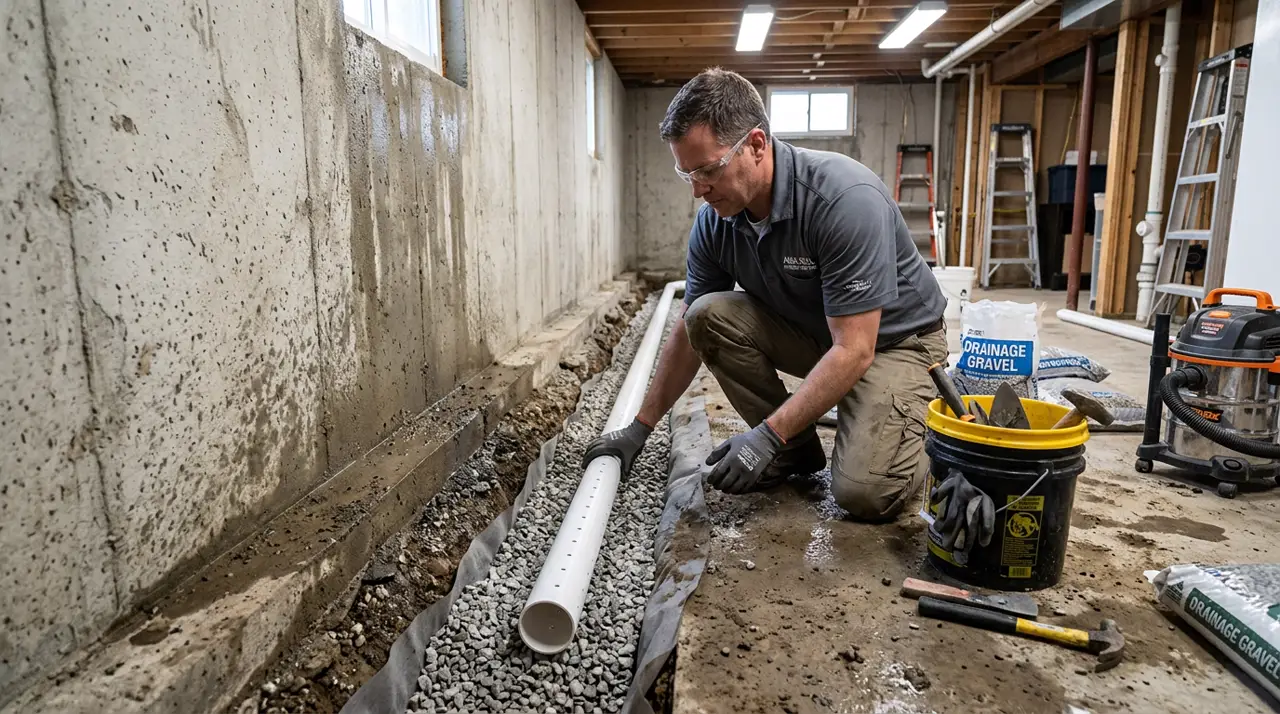
Interior drain tile installation — the most commonly installed basement waterproofing system in the US.
Why Your Basement Gets Wet in the First Place
Before spending a dollar on waterproofing, it helps to understand why water is getting in at all. There are really only a handful of causes, and knowing yours will point you toward the right fix.
Hydrostatic pressure is the most common culprit. When the soil around your foundation becomes saturated with water — from rain, snowmelt, or a high water table — it exerts outward pressure against your foundation walls. Concrete, even poured concrete, is not truly waterproof. It's porous, and over years, water works its way through hairline cracks, joint gaps, and the pores in the concrete itself.
Cracks in the foundation are another entry point. Vertical cracks are usually caused by concrete curing and are mostly cosmetic. Horizontal cracks are more serious — they indicate lateral soil pressure and can be structurally concerning. Diagonal cracks often indicate differential settlement. Each type may require a different repair approach before waterproofing begins.
Window well flooding happens when below-grade window wells fill with water faster than they drain. Poor grading — where the soil around the home slopes toward the foundation instead of away from it — sends rainwater straight to your walls. These are surface drainage issues that can sometimes be fixed without major waterproofing work.
Understanding the source matters because the wrong solution wastes money. Applying interior waterproofing paint to a wall where water is entering through a crack won't stop the leak — it'll just delay it and possibly make it worse by trapping moisture in the wall.
The Main Waterproofing Methods — and What They Actually Cost
Waterproofing contractors love to make this subject sound more complicated than it is. At its core, you have two directions to work from: the inside or the outside. Everything else is a variation within those two approaches.
| Method | Typical Cost Range | Best For |
|---|---|---|
| Interior drain tile system | $5,000 – $12,000 | Chronic water intrusion, high water table |
| Sump pump installation | $1,000 – $3,500 | Collecting and discharging water |
| Battery backup sump pump | $400 – $900 (add-on) | Power outage protection |
| Interior wall panels / membrane | $3,000 – $8,000 | Diverting seepage into drainage channel |
| Crack injection (polyurethane) | $400 – $800 per crack | Isolated hairline cracks in poured walls |
| Hydraulic cement (DIY) | $20 – $100 | Minor, active small leaks |
| Exterior excavation waterproofing | $15,000 – $30,000+ | Full foundation waterproofing, new construction |
| Exterior drainage board + membrane | $10,000 – $20,000 | New builds, accessible foundations |
| Window well covers & drainage | $200 – $600 per well | Flooded window wells |
| Grading correction | $500 – $3,000 | Surface water redirected toward foundation |
Interior Waterproofing: Managing Water That Has Already Entered
Interior waterproofing doesn't actually stop water from getting into the wall. What it does is intercept water after it enters and channel it away before it can flood your floor or damage your belongings. This is an important distinction. It's not a fix for the source of the problem — it's a management system for the symptom. That said, for most existing homes, interior waterproofing is the most practical, most commonly installed, and most cost-effective solution available.
Interior Drain Tile System (French Drain)
A trench is jackhammered along the perimeter of the basement floor, at the base of the walls. A perforated pipe is laid in gravel in that trench, and the whole thing is covered with concrete. Water that seeps through the walls or up through the floor flows into the pipe and travels to a sump pit. Cost: $5,000–$12,000 for a typical 1,200 sq ft basement.
Sump Pump
The sump pump is the engine of your interior drainage system. It sits in a pit dug into the floor, collects the water channeled by the drain tile, and pumps it out through a discharge line to daylight (away from the foundation). A quality submersible sump pump runs $200–$800 for the pump itself, with professional installation bringing the total to $1,000–$3,500. A battery backup unit adds $400–$900 and is strongly recommended.
Crack Injection
For isolated cracks in poured concrete walls (not block), polyurethane foam injection is one of the most effective targeted repairs available. A technician drills ports into the crack at intervals, injects low-pressure polyurethane foam that expands to fill the crack, then caps the ports. Done correctly, it seals the crack permanently from the interior. Cost: $400–$800 per crack, depending on length and complexity.
Exterior Waterproofing: Stopping Water at the Source
Exterior waterproofing is the gold standard. It involves excavating the soil all the way down to the footing on the outside of the foundation wall, then applying a waterproof membrane directly to the wall surface, installing drainage board, and laying exterior drain tile that carries water away from the foundation before it ever has a chance to enter. When done correctly, it can last the life of the structure.
The catch is cost and disruption. Excavating around a typical home requires heavy equipment, removes all landscaping within several feet of the house, and takes multiple days of work. Labor is the dominant cost because so much of it is manual. For a full-perimeter exterior waterproofing job on a 1,500 sq ft home, expect to pay $20,000 to $35,000, sometimes more in high-labor-cost markets.
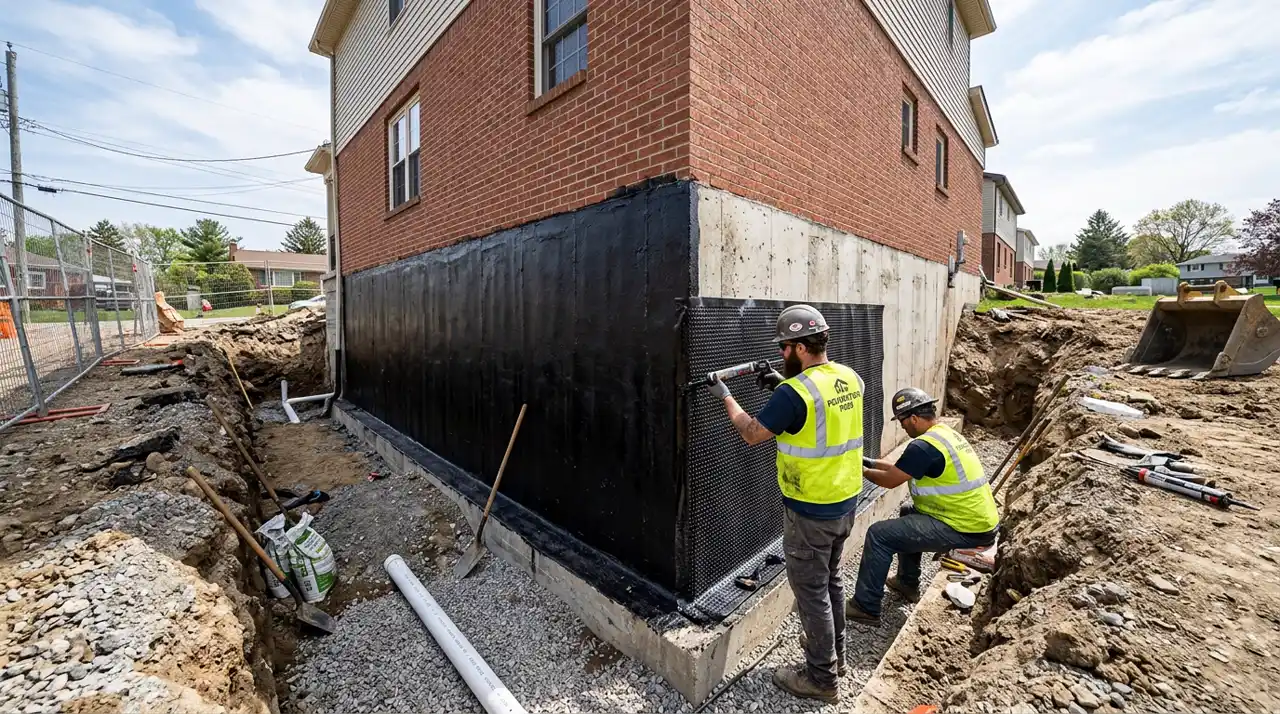
Exterior waterproofing: excavated foundation wall with black rubber membrane and drainage board panel, the most comprehensive (and most expensive) approach.
Full Excavation + Membrane
The complete exterior package: excavate to footing depth, clean and prep the wall, apply rubberized asphalt or polymer membrane coating, install a dimple drainage board (which creates an air gap so water can flow freely), lay filter fabric, install exterior drain tile at the footing, backfill with clean gravel, and restore the soil. Cost: $15,000–$35,000+ for a typical home perimeter.
Factors That Affect Your Total Cost
The ranges above are starting points. Your actual quote will be shaped by several variables that are specific to your property.
Basement size and perimeter length. Interior drain tile is priced per linear foot. More perimeter means more trench, more pipe, and more concrete. A 2,400 sq ft basement costs roughly twice as much to drain-tile as a 1,200 sq ft basement.
Access and obstacles. If your basement is finished, the contractor has to demolish and remove drywall, flooring, and trim before the drain tile work can begin — and you'll need to factor in the cost of finishing it again afterward. Finished basement demolition can add $2,000–$8,000 to the job before a single shovel hits the floor.
Foundation type. Poured concrete foundations handle crack injection well. Block foundations are inherently more porous and often require wall panels or interior drainage systems rather than crack injection. Block basements are typically more expensive to waterproof than poured concrete.
Severity of the problem. A basement that takes on an inch of water during heavy rains needs a different solution than one with a faint white mineral stain on the wall. Contractors assess severity during the inspection, and the quote reflects it.
Sump pump configuration. Single pump, double pump, battery backup, water alarm, pedestal vs. submersible — the pump configuration adds cost and varies by how much water the system needs to handle and how critical backup power is to you.
Regional labor rates. A drain tile system that costs $7,000 in a Midwestern market might cost $11,000 in New England or the Pacific Northwest. Material costs are similar everywhere; labor varies widely.
What the Warranty Should Tell You
The warranty on a waterproofing job is one of the most telling indicators of the contractor's confidence in their own work. Reputable companies offer lifetime transferable warranties on interior drainage systems. "Transferable" means the warranty passes to the next owner if you sell the home — a meaningful selling point.
Be cautious of companies that offer short warranties (one to five years) on a system that should last decades, or that have dense fine print excluding virtually everything. Ask specifically: what is and isn't covered? What triggers a warranty call-out? Who handles the repair?
Crack injection warranties typically cover the specific crack injected, not the wall. If a new crack forms nearby, that's a separate repair. Make sure you understand exactly what you're getting.
Cheaper Fixes That Are Worth Trying First
Not every damp basement needs a $10,000 drainage system. Before calling a waterproofing company, walk through these lower-cost interventions:
Fix the grading. The soil around your foundation should slope away at about 6 inches of drop over 10 feet. If it slopes toward the house, surface water is running straight to the wall. Regrading is relatively inexpensive ($500–$2,000) and can solve mild dampness problems entirely.
Clean and extend your gutters. Clogged or undersized gutters dump huge volumes of water directly against the foundation. Adding downspout extensions to discharge water at least 6 feet from the house is a $10 fix that sometimes eliminates the problem.
Seal window wells. Install covers over basement window wells to prevent them from filling with water during downpours. Add gravel at the bottom and a drain if they already flood.
Apply hydraulic cement. For small, active cracks with a slow trickle of water, hydraulic cement (mixed to a thick putty) can be packed into the crack and sets even underwater. It's a temporary patch, not a permanent solution, but it's a $20 fix that buys time.
If you've done all of the above and still have significant water entry, it's time to call in a professional and get the proper system installed.
Choosing a Basement Waterproofing Contractor
This industry has its share of bad actors. The basement waterproofing sales process often involves high-pressure in-home consultations, inflated "today only" discounts, and fear-based tactics. Here's how to protect yourself.
Get at least three quotes. Prices vary dramatically between companies for the same scope of work. One quote is meaningless context; three gives you a real picture of the market.
Verify the license and insurance. Requirements vary by state, but the contractor should carry general liability and workers' comp. If a worker is injured in your basement without workers' comp coverage, you can be liable.
Check the warranty carefully. Ask how warranty claims are handled, how quickly they respond, and whether the company has been in business long enough to honor a "lifetime" warranty.
Ask about the specific solution and why. A good contractor can explain exactly why they're recommending interior versus exterior, what problem they're solving, and what happens to the water after the system collects it. If they can't explain it clearly, that's a red flag.
Check reviews on multiple platforms. Google, BBB, Angi, and Yelp. Look for patterns in the complaints, not just the rating. Common patterns like "didn't return for warranty work" or "sold a system I didn't need" are worth taking seriously.
Planning a Renovation? Start with the Right Contractor
Our complete contractor checklist helps you verify licenses, compare bids, and protect yourself before signing.
Frequently Asked Questions
How much does basement waterproofing cost on average?
Most homeowners spend between $5,000 and $15,000 for a complete interior drainage system with sump pump. Exterior waterproofing is more expensive, typically ranging from $15,000 to $35,000 or more depending on the size of the home and depth of excavation needed.
Is interior or exterior basement waterproofing better?
Interior waterproofing manages water that has already entered, making it ideal for most homeowners who have water intrusion but limited budget or access constraints. Exterior waterproofing stops water before it reaches the foundation wall and is the gold standard, but it costs significantly more and is most practical during new construction or major foundation repairs.
Does basement waterproofing add value to a home?
Yes. A dry, waterproofed basement can add meaningful value to a home, especially in markets where finished basements are expected. More importantly, it prevents the far more costly damage that water intrusion causes over time: mold remediation, structural rot, and foundation deterioration.
How long does interior basement waterproofing last?
A properly installed interior drainage system with a quality sump pump should last 20 to 30 years. Sump pump motors typically need replacement every 7 to 10 years. Most reputable waterproofing contractors offer lifetime transferable warranties on their drainage systems, which is worth looking for.
Can I waterproof my basement myself?
Surface-level fixes like applying hydraulic cement to small cracks or using waterproofing paint are DIY-friendly. However, installing interior drainage channels, sump pits, or exterior membrane systems requires professional tools, concrete work, and expertise. Attempting these as a DIY project often leads to inadequate results and wasted money.