Windows & Exterior
Replacement Windows Cost Guide: What Homeowners Pay in 2026
Let me start by saying something the window replacement industry really doesn't want you to hear: the payback period on new windows through energy savings alone is long — often 15 to 25 years. But that doesn't mean replacement windows aren't worth doing. Drafty, fogged, or rotting windows are genuinely miserable to live with. New windows make a home more comfortable, quieter, and more attractive to buyers. They also stop air infiltration that single-pane math never fully captures. Understanding what you're actually buying — and what it should cost — is how you make a smart decision rather than an emotional one after a slick sales pitch.
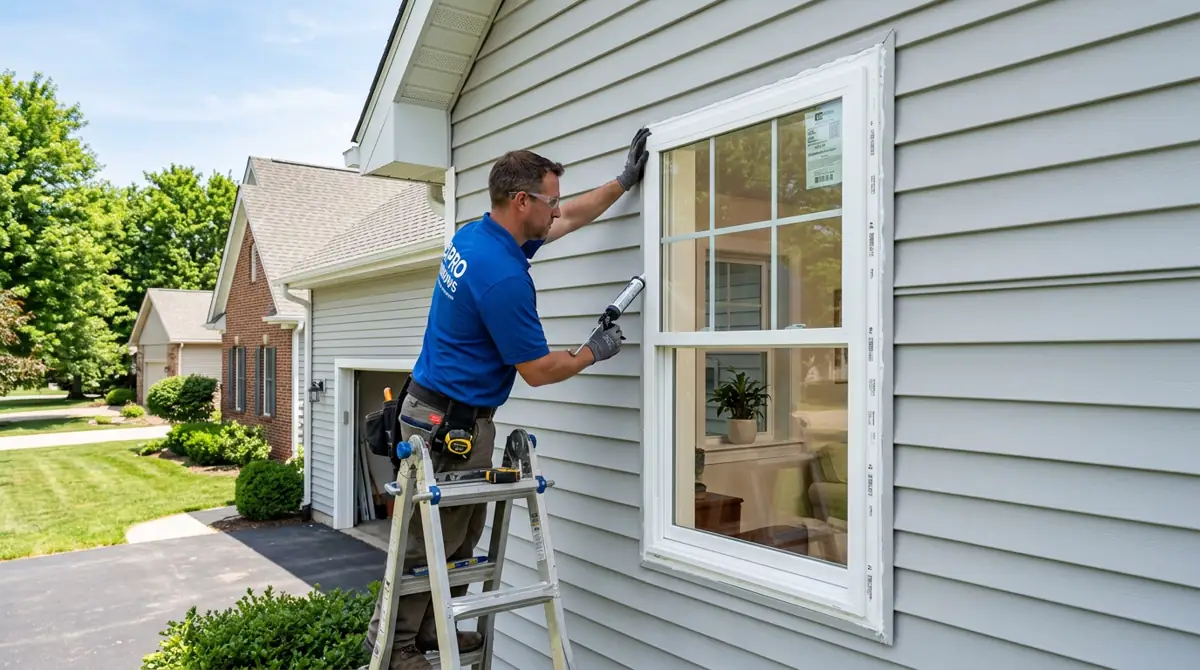
Insert replacement (pocket replacement) windows fit into the existing frame, making installation faster and less disruptive. Full-frame replacement involves removing everything down to the rough opening and is necessary when frames are damaged or rotted.
Why Window Costs Vary So Dramatically
Ask three window companies for a quote on the same house and you'll likely get three very different numbers — sometimes 100% apart. That's not coincidence. Window replacement pricing is influenced by more variables than almost any other home improvement project: the window style, frame material, glass package, installation method, the number of windows, and the company's business model all feed into the final number.
Direct-to-consumer window companies with sales teams working on commission will often quote significantly higher than local installers buying from the same supply chain. That doesn't always mean the product is better — it often just means you're paying for their marketing and sales infrastructure. Understanding the components of the cost gives you the ability to compare quotes intelligently rather than guessing which number to trust.
Cost by Window Style
Window style is the first major cost variable. Some styles require more complex manufacturing, more glass, or more precision installation than others.
Double-Hung
The most common residential window. Both sashes move, making cleaning easier. Wide range of sizes and options.
Single-Hung
Only the bottom sash moves. Less common today but slightly cheaper due to simpler mechanics.
Sliding (Glider)
Sashes slide horizontally. Good for wide openings with limited vertical clearance.
Casement
Hinged on one side, cranks open outward. Excellent seal when closed; great ventilation.
Awning
Hinged at top, opens outward from bottom. Can be left open in light rain.
Picture (Fixed)
Does not open. Maximizes glass area and view. Best combined with operable windows nearby for ventilation.
Bay or Bow
Projects outward from the wall plane. Multiple units combined into one assembly. Higher cost due to structure, roof, and interior finishing work required.
Egress (Basement)
Meets code minimum opening size for emergency exit. Often requires enlarging the rough opening — adds excavation cost for below-grade installation.
Cost by Frame Material
Frame material is the second biggest cost driver and arguably the most important decision for long-term performance and maintenance. Each material has genuine trade-offs that matter depending on your climate, your home's style, and how much ongoing maintenance you're willing to do.
| Frame Material | Installed Cost Range | Lifespan | Maintenance | Best For |
|---|---|---|---|---|
| Vinyl (PVC) | $300–$900/window | 20–40 years | Very low — never needs painting | Most residential replacements; best value for performance vs. cost |
| Fiberglass | $600–$1,800/window | 30–50 years | Low — can be painted if desired | Extreme climates; premium builds; best long-term performance |
| Wood | $800–$2,500/window | 30+ years (with maintenance) | High — periodic painting and caulking required | Historic homes; interior aesthetics; when matching original character matters |
| Wood-clad (exterior aluminum or fiberglass) | $700–$2,200/window | 25–40 years | Low exterior, moderate interior | Homeowners who want wood's interior look without exterior maintenance burden |
| Aluminum | $400–$1,100/window | 30–40 years | Low | Commercial applications; modern/industrial aesthetics; mild climates only |
Vinyl dominates the replacement window market for a reason — it doesn't rot, never needs painting, holds its shape well through seasonal expansion and contraction, and costs less than fiberglass or wood. The knock on early vinyl windows (color fading, warping in heat) has largely been addressed in modern formulations. For most homeowners doing a straight replacement in a standard residential home, vinyl is the right call.
Fiberglass is worth the premium when you're in a climate with extreme temperature swings, when the windows are very large (fiberglass is dimensionally more stable than vinyl in large spans), or when you're doing a high-end project where product longevity and paintability matter. Marvin Integrity, Pella Impervia, and Andersen 100 Series are popular fiberglass lines in the mid-to-upper price range.
Glass Packages: Where Energy Performance Lives
The glass unit — not the frame — is where most of a window's thermal performance comes from. Modern insulated glass units (IGUs) stack two or three panes of glass with a sealed air or gas space between them, dramatically reducing heat transfer compared to single-pane glass.
| Glass Package | Typical Added Cost | U-Factor | Best Climate |
|---|---|---|---|
| Single pane | Base (old standard) | ~1.0 | Not recommended for new installations anywhere |
| Double pane (standard) | Included in most replacement windows | 0.30–0.45 | Mild climates; significant upgrade over single pane |
| Double pane with low-e coating | +$30–$80/window | 0.22–0.35 | Most US climates; reflects infrared while allowing light through |
| Double pane with argon gas fill | +$20–$50/window | 0.20–0.30 | Cold climates; argon is denser than air and transfers heat more slowly |
| Triple pane | +$100–$250/window | 0.15–0.22 | Very cold climates (Zone 6+); diminishing returns in milder areas |
For most homeowners in the continental US, a double-pane window with low-e coating and argon fill is the sweet spot — it hits the ENERGY STAR threshold for most climate zones, costs modestly more than a basic double-pane, and delivers real comfort improvement. Triple-pane glass makes clear sense in Minnesota, Wisconsin, Maine, and similar northern climates. In the Sun Belt, solar heat gain coefficient (SHGC) matters more than U-factor — a low-SHGC low-e glass keeps summer heat out without sacrificing too much winter solar gain.
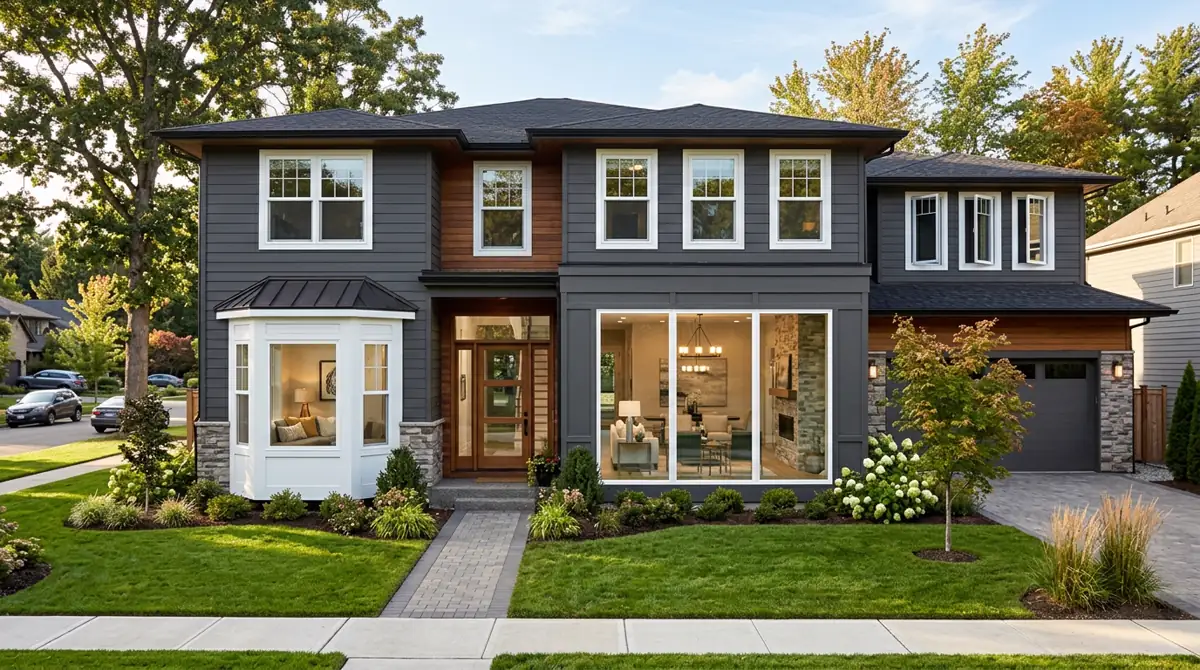
A well-designed window package mixes operating windows for ventilation (casements, double-hungs) with fixed picture windows for maximum views and light in areas where you don't need airflow.
Insert vs. Full-Frame Replacement: Cost and When Each Makes Sense
This is the decision that most homeowners don't fully understand going in, and it can significantly affect both cost and outcome.
Insert replacement (pocket replacement)
The existing window frame stays in place. The installer removes the old sashes and glass, then slides a new pre-built window unit into the existing frame cavity. Insert replacement is faster, less invasive, and less expensive — you don't need drywall repair, exterior trim replacement, or interior casing work afterward.
Insert replacement works well when the existing frame is in good condition — structurally sound, not rotted, not water-damaged, with no evidence of moisture infiltration. It's the right choice for the majority of window replacements in homes where the original installation was done properly.
The trade-off: the new window's glass area is slightly smaller than the original because the insert frame sits inside the existing frame. In older homes with large original windows, this visible frame narrowing can be aesthetically noticeable.
Full-frame replacement
Everything comes out — sashes, frame, interior and exterior trim — down to the rough opening. A new window is installed from scratch. Full-frame replacement is necessary when existing frames are rotted, damaged, or when the rough opening needs to be resized.
Full-frame work costs more — expect to add $150 to $400 per window in additional labor and trim material — and requires drywall repair and painting on the interior, plus exterior trim replacement. But it's the only correct approach when frames are compromised, and it's also the approach that gives you the largest glass area and cleanest result from a new installation.
The Sales Pitch Problem
Window replacement has one of the most aggressive sales cultures in home improvement. Companies run heavily discounted promotions ("50% off if you sign today"), send commission-based sales reps who work from your home for two or three hours presenting inflated "retail" prices, and use high-pressure close tactics designed to prevent you from getting competing quotes.
The result is that many homeowners pay 30 to 60 percent more than necessary for mid-range vinyl windows — not because the product is better, but because the sales process was designed to extract maximum margin from single-quote buyers.
The antidote is simple: always get at least three quotes, never sign during the first appointment, and insist on written quotes that specify the window manufacturer, product line, glass package, and U-factor/SHGC ratings. Once you can compare apples to apples across quotes, the right choice becomes much clearer.
How Many Windows and Total Project Cost
Most replacement window companies offer volume discounts — the per-window cost typically drops when you replace 5 or more windows at once. This makes sense both from the installer's scheduling efficiency and from a negotiating leverage standpoint.
Typical whole-house replacement costs in 2026 by home size and window type:
- Small home (8–10 windows), standard vinyl: $4,000–$9,000 installed
- Medium home (12–15 windows), mid-range vinyl with low-e argon: $7,000–$15,000 installed
- Medium home (12–15 windows), fiberglass: $12,000–$25,000 installed
- Large home (18–25 windows), premium wood-clad: $20,000–$50,000+ installed
Energy Tax Credits: What's Available in 2026
The Inflation Reduction Act's Energy Efficient Home Improvement Credit (Section 25C) provides a 30% federal tax credit — up to $600 per year — for ENERGY STAR certified windows that meet the climate zone requirements. This is a non-refundable credit (it reduces tax owed, not a check you receive), and the $600 cap per year applies to the windows category specifically.
For a homeowner replacing 12 windows at $1,000 each ($12,000 total) with qualifying ENERGY STAR windows, a 30% credit would theoretically be $3,600 — but the annual cap limits the actual credit to $600. Spreading a large replacement project across two tax years allows you to claim up to $1,200 in total credits. Check with a tax professional for your specific situation, as credit rules can change with new legislation.
What to Look for in a Window Warranty
Window warranties are not all the same, and the differences matter over a 20-to-40-year product lifespan.
- Glass seal warranty: Most manufacturers warrant the insulated glass unit against seal failure (fogging) for 10 to 20 years. Look for 20-year coverage on the glass seal minimum.
- Frame and hardware warranty: Should be lifetime on the frame for vinyl; typically 10–20 years on hardware (locks, cranks, balances).
- Labor warranty: The installer should warrant their labor separately — typically 1 to 5 years. A company that won't warrant their installation work is a company you shouldn't hire.
- Transferability: Does the warranty transfer to a new owner if you sell? Transferable warranties add real value at resale. Many big-name window company warranties are non-transferable — something their salespeople rarely volunteer.
Budgeting a Bigger Home Improvement Project?
Read our home renovation budgeting guide for strategies that work across any project — from windows to full renovations.
Frequently Asked Questions
How much do replacement windows cost?
In 2026, expect $300–$800 per window for standard vinyl installed, $500–$1,200 for mid-range double-pane low-e argon vinyl, and $900–$2,500+ for fiberglass or wood. A full-house replacement (10–15 windows) typically runs $5,000–$20,000+ depending on window type and market.
How long do replacement windows last?
Quality vinyl windows: 20–40 years. Fiberglass: 30–50 years. Wood (properly maintained): 30+ years. The glass seal is typically the first component to warrant replacement, usually fogging after 15–25 years.
Do replacement windows save on energy bills?
Yes, but payback through energy savings alone takes 10–25 years. The real value is in comfort improvement, noise reduction, and resale appeal. Replacing single-pane windows with double-pane low-e units in a cold climate typically reduces heating costs by 10–20%.
What is the best window frame material?
Vinyl for most residential replacements — low maintenance, affordable, good insulation. Fiberglass for extreme climates, large windows, or premium builds. Wood for historic homes or when interior aesthetics take priority. Aluminum only in mild climates and modern architectural contexts.