Masonry & Concrete
Split Face CMU Block: The Complete Guide to Sizes, Costs, Uses & Installation (2026)
There's a reason split face CMU has become one of the most popular masonry materials in both commercial and residential construction over the past few decades. It solves a problem that plain concrete block never could: it gives you all the structural durability of CMU with a visual character that actually makes people stop and notice it. That rough, fractured face that mimics quarried stone doesn't come from some surface coating or thin veneer — it's baked right into how the block is made. This guide covers everything from how the splitting process works to what you'll actually pay for it installed, and where it performs best.
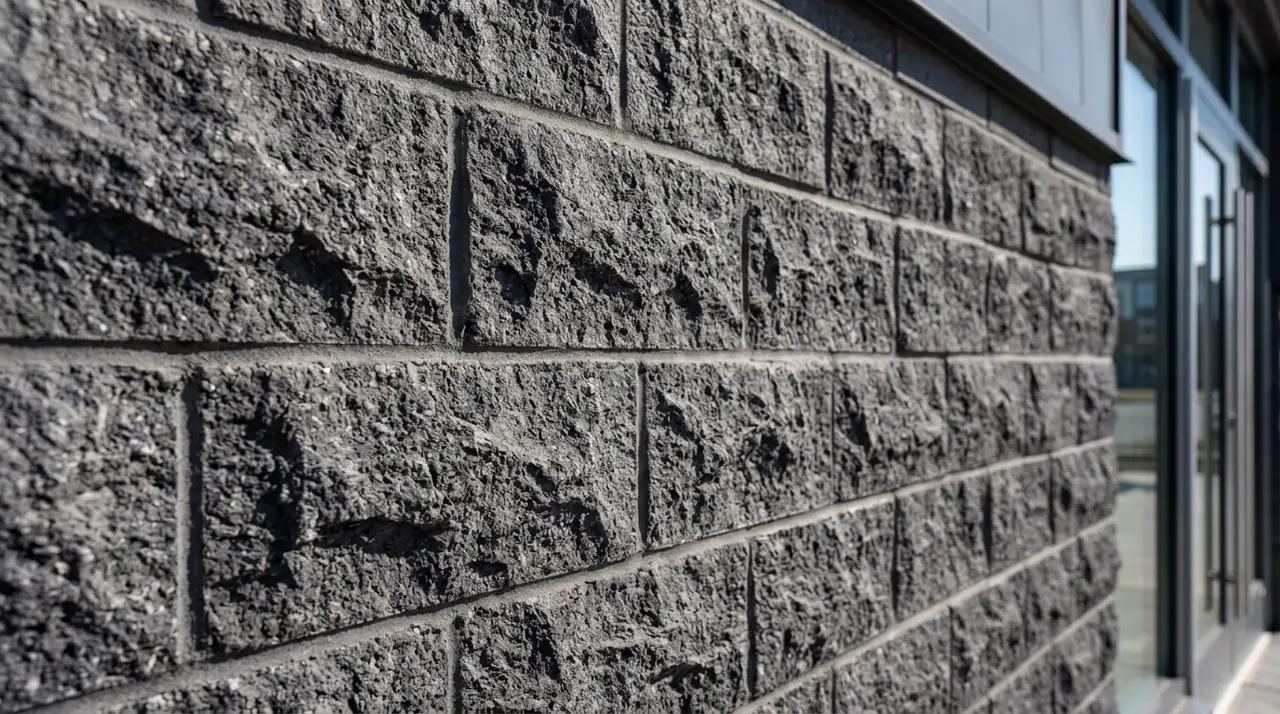
The split face creates dramatic shadow lines and a natural stone appearance that smooth CMU simply can’t replicate — without sacrificing any of the structural integrity of standard concrete masonry.
What Is Split Face CMU and How Is It Made?
Split face CMU starts life exactly the same way as a standard smooth-face concrete block: Portland cement, aggregate, water, and any pigments are mixed, placed in a mold, and compressed. But here's where the process diverges in a clever way. Instead of molding each block at its final length of 15⅝" (for a nominal 16" block), split face blocks are cast at double the normal length — essentially as a full-length double block.
Once the concrete has cured sufficiently, a hydraulic splitting blade strikes the double block across its middle with tremendous force. The block fractures along a controlled path, and the result is two individual blocks, each with one machine-smooth face (from the mold) and one freshly fractured face. That fractured face is what becomes the exposed decorative surface of the finished wall.
The brilliance of this process is that the fractured surface isn't manufactured — it's created by the concrete breaking along its own internal structure. The result is a genuinely random, irregular texture that looks remarkably like quarried or split natural stone. No two split face blocks are identical, which is precisely what gives split face CMU walls their appeal. They have an organic quality that you simply cannot achieve by stamping or molding a texture onto a block surface.
The aggregate composition plays a big role in the final appearance. Manufacturers who use larger, more varied aggregate produce a rougher, more dramatic split face. Those using finer aggregate produce a tighter, more subtle texture. Some premium split face products use lightweight expanded shale or attractive crushed stone aggregate specifically chosen for their visual effect when fractured.
Split Face vs. Smooth Face CMU: How Do They Compare?
| Property | Split Face CMU | Smooth Face CMU |
|---|---|---|
| Surface Texture | Rough, fractured, irregular (stone-like) | Smooth, uniform (from mold) |
| Structural Strength | Same — ASTM C90 Grade N, 1,900+ psi | Same — ASTM C90 Grade N, 1,900+ psi |
| Dimensions (nominal) | Same standard sizes (4", 6", 8", 10", 12") | Same standard sizes |
| Weight | Slightly lighter (fractured face removes material) | Standard weight for size class |
| Water Absorption | Higher — fractured face is very porous | Lower — molded face is denser |
| Sealing Required? | Yes, strongly recommended | Recommended but less critical |
| Cost per Block | $2.50–$8.00 (gray to colored) | $1.80–$4.00 (gray to colored) |
| Installed Cost (sq ft) | $20–$45 per sq ft | $15–$35 per sq ft |
| Visual Appeal | Excellent — decorative stone appearance | Utilitarian — plain gray block look |
| Painting/Coating | Requires more primer/paint due to porosity | Easier to paint with masonry paint |
| Graffiti Resistance | Lower — porous surface absorbs spray paint | Better — smoother surface cleans easier |
| Best For | Facades, visible retaining walls, landscape walls | Foundations, structural walls, hidden applications |
Available Sizes: What You Can Actually Buy
Split face CMU is available in all the standard CMU nominal sizes, though the most common widths you'll find at building suppliers are 4", 6", 8", and 12". Not every size will be stocked at every supplier — larger sizes and non-standard configurations are often special-order items.
| Nominal Size (W×H×L) | Actual Size | Typical Use | Approx Cost (gray) |
|---|---|---|---|
| 4×8×16" | 3⅝×7⅝×15⅝" | Non-structural accent walls, veneer | $2.50–$4.00 |
| 6×8×16" | 5⅝×7⅝×15⅝" | Light partition walls, short landscape walls | $3.00–$4.50 |
| 8×8×16" | 7⅝×7⅝×15⅝" | Standard retaining walls, building facades | $3.50–$5.50 |
| 8×8×8" (half) | 7⅝×7⅝×7⅝" | Course alternation at corners | $2.00–$3.00 |
| 10×8×16" | 9⅝×7⅝×15⅝" | Taller retaining walls, heavy facades | $4.50–$7.00 |
| 12×8×16" | 11⅝×7⅝×15⅝" | High retaining walls, commercial structural walls | $5.50–$8.50 |
Colors and Aggregate Options
One of the biggest advantages split face CMU has over smooth-face block is the dramatic variety of color options available. Since the color is integral (mixed into the concrete itself rather than applied as a surface coating), it won't peel, chip, or fade the way paint does — and when the block face is fractured, the color runs all the way through.
Beyond solid colors, some manufacturers offer blended or variegated split face blocks where two or more pigments are mixed unevenly, creating a marbled or multi-toned effect that even more closely resembles natural stone. These premium products cost more and often require minimum order quantities, but the visual result on a finished wall can be stunning.
The aggregate type also affects the final look significantly. Standard gray blocks use typical gravel aggregate; the fractured face reveals the mix of gray gravel and paste. Blocks made with quartz aggregate have sparkling flecks throughout the fractured face. Blocks using crushed limestone or granite aggregate take on the color and character of those stones when split. Ask your supplier specifically what aggregate is in the block mix if appearance is critical to your project.
Best Applications for Split Face CMU
🏛 Commercial Building Facades
This is where split face CMU has dominated for decades. Office buildings, retail centers, schools, churches, warehouses — the combination of structural performance, fire resistance, low maintenance, and attractive appearance makes split face CMU a cost-effective alternative to natural stone or architectural precast on commercial exteriors. A well-designed split face facade can last 75+ years with minimal upkeep beyond periodic sealing.
🏠 Residential Retaining Walls
For homeowners building retaining walls that will be visible from the yard, street, or outdoor living areas, split face CMU is a popular alternative to smooth block. The decorative texture turns a purely functional structure into a landscape feature. Most residential retaining walls (4–6 feet) use 8-inch split face CMU with vertical rebar, grout fill, and a cap course. Always seal the finished wall — the rough face is a moisture magnet without it.
🌳 Garden Walls and Raised Planters
Split face CMU garden walls and raised planters are increasingly popular in both residential and commercial landscaping. The natural stone appearance integrates well with plantings and outdoor environments, and the structural mass handles soil pressure better than lightweight alternatives like dry-stack decorative block. For planters, waterproof the interior face before filling to prevent moisture from migrating through the block and causing efflorescence on the visible exterior surface.
🏛 Perimeter and Security Walls
Split face CMU is widely used for perimeter walls around commercial and industrial properties, school campuses, and residential communities. It provides a robust, graffiti-resistant (when properly sealed), and visually appropriate security barrier. The wall's mass provides real physical deterrence, and the decorative appearance avoids the institutional look of plain block walls.
🏠 Accent Walls and Interior Features
Split face CMU isn't only for exterior use. Interior accent walls — in commercial lobbies, restaurants, retail spaces, and increasingly in residential great rooms and basements — use split face block for its textural depth and industrial-meets-natural character. Interior split face walls don't need waterproofing sealer but benefit from a clear penetrating sealer to reduce dust from the fractured surface and make cleaning easier.
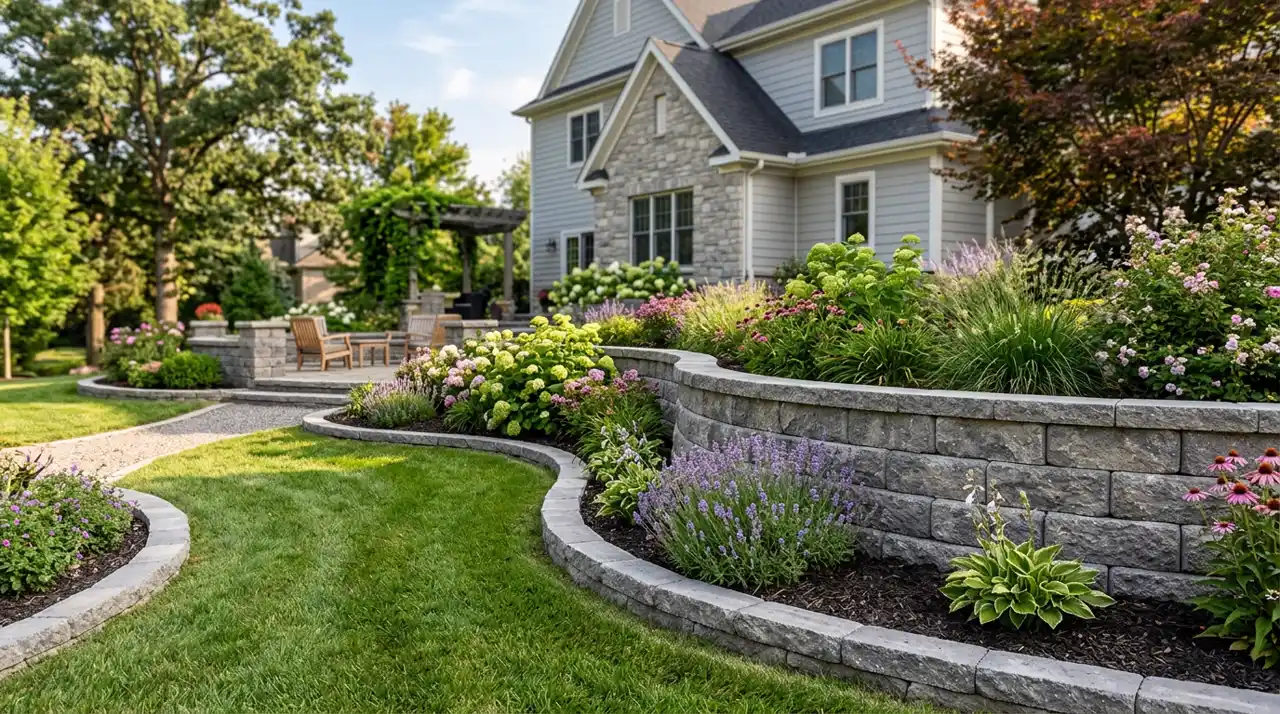
Split face CMU transforms a functional retaining wall into a genuine landscape feature — the natural stone texture integrates beautifully with plantings and outdoor living areas.
Pros and Cons of Split Face CMU
✓ Advantages
- Attractive natural stone appearance without the cost of actual stone
- Full structural strength — identical ASTM C90 rating as smooth-face CMU
- Integral color runs through the block — won't peel or fade like paint
- Excellent fire resistance — same as standard CMU
- Durable and long-lasting (50+ years when properly maintained)
- Available in many colors and aggregate types
- Works for both structural and decorative applications
- Lower cost than natural stone with similar visual appeal
- Standard ASTM dimensions — compatible with standard CMU construction
✗ Disadvantages
- Higher cost than smooth-face CMU (20–50% more per block)
- Porous fractured face requires sealing and periodic re-sealing
- Prone to efflorescence if not properly sealed
- More difficult to clean if stained (texture traps dirt)
- Graffiti removal is harder than on smooth block
- Requires specialty corner blocks at every outside corner
- Cutting creates rough, jagged edges — cuts are less clean than smooth block
- Color batch variation possible between orders — order all at once
- Heavier labor requirements due to careful face orientation
The Critical Importance of Sealing Split Face CMU
If there's one maintenance mistake homeowners make with split face CMU it's skipping the sealer. The fractured surface has dramatically higher porosity than the molded face of smooth-face CMU. When you break concrete, you expose a fresh surface full of micro-cracks, voids, and open aggregate faces — all of which absorb water readily. In exterior applications, this leads to a cascade of problems that are entirely avoidable.
Efflorescence is the most common visible problem: water migrating through the block dissolves calcium salts from the concrete, which then crystallize on the surface as white mineral deposits when the water evaporates. On a dark-colored split face wall, efflorescence is visually striking and unsightly. It's not structurally damaging in itself but indicates ongoing water infiltration that needs addressing.
Freeze-thaw damage is the more serious concern in cold climates. Water that penetrates the porous split face and then freezes expands approximately 9% in volume. This expansion creates micro-fractures within the block face. Over many freeze-thaw cycles, the fractured surface begins to spall, pop, and deteriorate — exactly the kind of damage you'd see on old unsealed concrete in harsh climates. A quality masonry sealer is your primary defense against this.
What type of sealer to use: For split face CMU, penetrating sealers are generally preferred over film-forming (coating) sealers. Silane and siloxane-based penetrating sealers soak into the block's pores and chemically react with the concrete to create a water-repellent surface without changing the block's appearance or texture. Film-forming sealers create a surface coating that can trap moisture behind it, potentially making efflorescence worse and peeling over time.
Apply sealer to a clean, dry wall after installation and full mortar cure (at least 28 days after laying). Reapplication frequency depends on climate, exposure, and product — typically every 5 to 10 years. In harsh freeze-thaw climates or highly exposed coastal environments, lean toward the more frequent end of that range.
Cost Breakdown: What You'll Actually Pay
| Cost Item | Typical Range | Notes |
|---|---|---|
| Standard gray 8" split face block | $3.50–$5.50/block | Per unit at building supply |
| Colored (pigmented) 8" split face block | $5.00–$8.00/block | Premium colors cost more |
| Split face corner blocks | $4.50–$9.00/block | Two split faces — costs more than field block |
| Mortar (80-lb bag) | $12–$18/bag | ~10 bags per 100 sq ft of wall |
| Mason labor (per sq ft) | $12–$22/sq ft | Regional variation is significant |
| Rebar + grout fill | $3–$8/sq ft | Depends on spacing and grout volume |
| Footing (concrete) | $8–$18/linear ft | For walls over 2 ft high |
| Penetrating masonry sealer | $0.50–$1.50/sq ft | Applied after installation |
| Structural engineering (walls 4+ ft) | $500–$2,500 | Per project; required in most jurisdictions |
| Total installed (per sq ft) | $20–$45/sq ft | Wide range due to wall height and region |
Installation Tips You Won't Find in the Product Brochure
Orient every block the same way. Split face CMU blocks are fractured slightly differently from one another, but within a single block the texture is directional — top vs. bottom of the fractured face can look noticeably different. Before laying, establish a consistent orientation for all blocks and stick to it. Many masons mark the top of each block or lay them all in the same direction as they come off the pallet.
Plan your corner details before you start. Running bond corners with split face CMU require careful planning to maintain the 8-inch nominal module and ensure only split faces are visible on the outside of the wall. Sketch your corner configuration before ordering to confirm you've spec'd the right combination of field blocks, corner blocks, and half blocks.
Use a raked or tooled mortar joint. A concave or raked joint between split face blocks shadows nicely and emphasizes the individual block character. A flush joint tends to blend into the texture and loses the visual definition between courses. Most masons use a 3/8-inch raked joint on split face work for maximum visual appeal.
Keep the face clean during laying. Mortar that drips or smears onto the split face is significantly harder to remove than on smooth-face CMU because the rough texture holds it. Keep a damp sponge nearby and clean any mortar splatter from the face immediately — before it begins to set. Dried mortar on split face requires careful hand-scrubbing or acid washing, which can affect the block color.
Protect from rain during and immediately after installation. Fresh mortar that gets rained on before proper cure can wash calcium out to the block surface, causing early and heavy efflorescence. Cover the wall with plastic sheeting during wet weather for the first 72 hours after laying.
Split Face CMU vs. Other Decorative Masonry Options
vs. Natural stone veneer: Natural stone veneer (thin-cut stone applied over a CMU or framed backup wall) gives you the real stone look, but costs two to four times as much installed, requires a skilled stone mason, and involves more complex waterproofing details. Split face CMU is self-supporting, eliminates the backup wall, and is faster to build. For many applications, split face CMU is the pragmatic choice that delivers 80% of the aesthetic at 30% of the cost.
vs. Manufactured stone veneer (MSV): Manufactured stone veneer (concrete or foam products made to look like stone) is lighter, sometimes cheaper per square foot, and more flexible in profile and texture. But it's applied over a backup structure (typically CMU or steel stud framing with sheathing), which adds cost and complexity. MSV also has a shorter track record for durability than genuine CMU. For applications requiring structural wall function, split face CMU wins outright.
vs. Brick: Brick offers a different aesthetic — smaller modules, warmer color typically, and the traditional residential look. Brick is laid over a structural backup or in cavity wall construction, while split face CMU can be structural itself. Brick is generally more expensive per square foot installed. For contemporary, commercial, or modern residential aesthetics, split face CMU often reads better; for traditional residential applications, brick may be preferred.
Ready to Plan Your CMU Project?
Use our free CMU Block Calculator to estimate exactly how many blocks, bags of mortar, and rebar you need for any wall size.
Frequently Asked Questions
What is a split face CMU block?
A split face CMU is a concrete masonry unit cast at double length and mechanically fractured in half during manufacturing. The fractured face creates a rough, irregular, stone-like texture while maintaining the same structural properties as standard CMU. Each block has one rough split face and one smooth mold face.
How much does split face CMU cost per block?
Standard gray 8" split face blocks cost $3.50–$5.50 per block. Colored (pigmented) blocks cost $5.00–$8.00 per block. Installed cost (materials + labor) runs $20–$45 per square foot of finished wall, depending on wall height, reinforcement, and regional labor rates.
Does split face CMU need to be sealed?
Yes — strongly recommended. The fractured face is much more porous than smooth CMU and will absorb water, stain from efflorescence, and suffer freeze-thaw damage without a quality penetrating silane or siloxane masonry sealer. Apply after 28-day mortar cure; reapply every 5–10 years.
What is the difference between split face and smooth face CMU?
Structurally, they're identical — same ASTM C90 compressive strength and dimensions. The difference is purely surface texture. Split face has a rough, fractured stone-like surface; smooth face has a uniform molded surface. Split face costs 20–50% more and requires sealing due to higher porosity.
Can split face CMU be used for a retaining wall?
Yes. Split face CMU retaining walls are popular for visible landscape applications. Structural requirements are identical to smooth CMU — proper footing, vertical rebar, horizontal bond beams, drainage, and engineering review for walls over 4 feet. Always seal the finished wall.
What colors does split face CMU come in?
Common integral colors include standard gray, buff/tan, brown, red/terra cotta, charcoal, and white/cream. Some manufacturers offer blended or variegated multi-tone blocks. Aggregate type also affects appearance — quartz, limestone, and granite aggregates create distinctive visual effects when fractured.