Interior & Flooring
Flooring Installation Cost: Hardwood, Tile, Vinyl & Carpet — Complete 2026 Guide
New flooring can completely transform a room — but with so many options at wildly different price points, it's easy to overspend on something your rooms don't need or underspend somewhere that actually matters. A living room and a basement bathroom have very different requirements, and the "best" flooring for one space might be the worst choice for another. This guide cuts through the confusion and gives you real, current numbers for every major flooring type, along with honest guidance on which material belongs where.
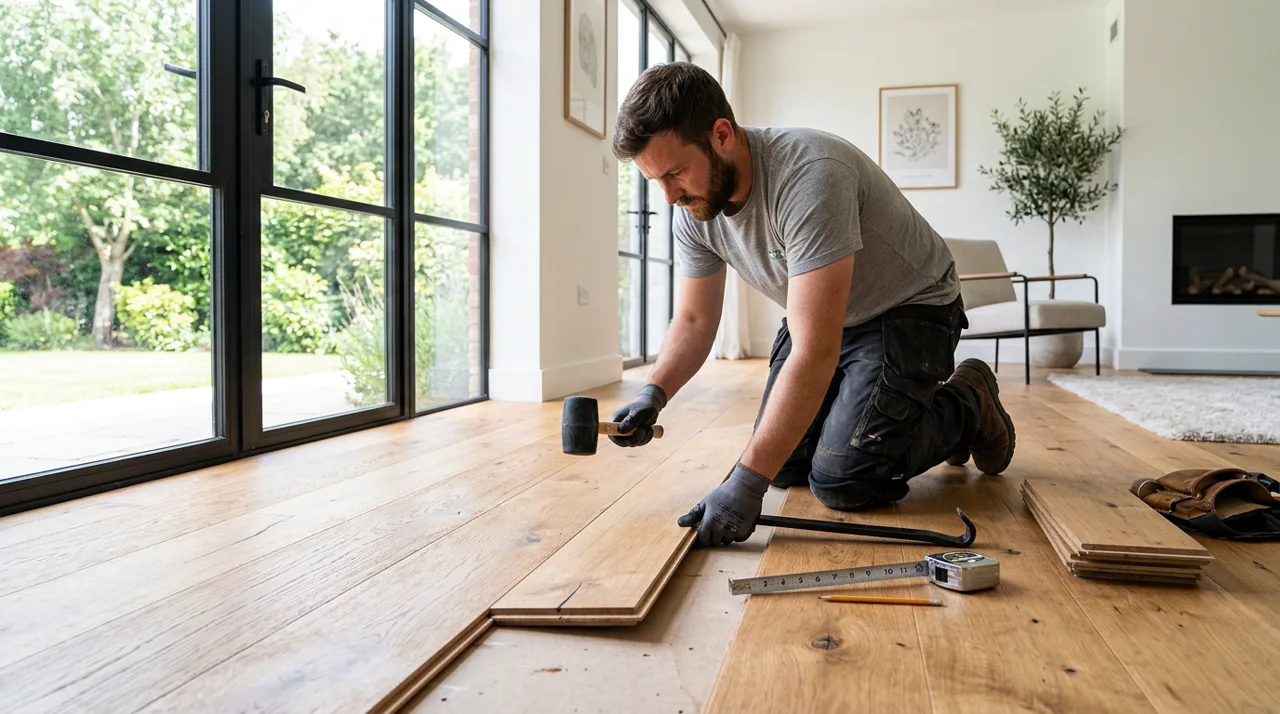
Hardwood flooring installation requires proper acclimation, precise measurement, and skilled technique — it's one of the more labor-intensive flooring types to install correctly.
How Flooring Is Priced
Every flooring quote you get will be broken into two components: materials and labor. The ratio between them varies dramatically by type. With carpet, labor is a small fraction of the total. With solid hardwood, labor can match or exceed material cost because of the complexity of installation and finishing. Understanding this split helps you evaluate quotes and spot padding.
There are also job-related costs that catch homeowners off guard: old flooring removal and disposal ($1–$3/sq ft), subfloor repair (priced per sheet of plywood), transition strips and moldings ($3–$8 per linear foot), and material waste factor (typically 10–15% extra ordered to account for cuts and mistakes). Always ask your contractor to itemize these in the quote.
Full Cost Comparison by Flooring Type
| Flooring Type | Material Cost ($/sq ft) | Installed Cost ($/sq ft) | Lifespan | Best Rooms |
|---|---|---|---|---|
| Carpet (builder grade) | $0.75–$2.50 | $3.00–$5.00 | 5–10 yrs | Bedrooms, basements |
| Carpet (mid-grade) | $2.00–$5.00 | $4.00–$7.00 | 10–15 yrs | Bedrooms, family rooms |
| Laminate | $1.50–$4.00 | $3.50–$8.00 | 15–25 yrs | Living rooms, hallways |
| Luxury Vinyl Plank (LVP) | $2.00–$6.00 | $4.00–$9.00 | 15–25 yrs | Any room, including wet areas |
| Vinyl Tile / Sheet | $1.00–$3.50 | $3.00–$6.50 | 10–20 yrs | Kitchens, bathrooms, laundry |
| Ceramic Tile | $1.50–$6.00 | $7.00–$14.00 | 20–50 yrs | Bathrooms, kitchens, entryways |
| Porcelain Tile | $3.00–$10.00 | $9.00–$18.00 | 30–75 yrs | High-traffic, wet areas, outdoors |
| Engineered Hardwood | $4.00–$10.00 | $8.00–$15.00 | 25–40 yrs | Living areas, bedrooms |
| Solid Hardwood | $5.00–$14.00 | $10.00–$22.00 | 50–100 yrs | Living rooms, dining rooms |
| Cork Flooring | $3.00–$7.00 | $6.00–$12.00 | 20–30 yrs | Home offices, playrooms |
| Bamboo Flooring | $3.50–$8.00 | $7.00–$14.00 | 20–30 yrs | Living areas (low humidity) |
Hardwood Flooring: The Premium Choice
Solid Hardwood
Solid hardwood is exactly what it sounds like: planks milled from a single piece of wood, typically 3/4 inch thick. Oak is by far the most common species, followed by maple, hickory, cherry, and walnut. The big advantages are longevity (a solid hardwood floor can last 50–100 years and be refinished multiple times) and resale value (buyers pay a premium for real hardwood). The limitations are real too: solid hardwood is sensitive to moisture and humidity changes, making it a bad choice for basements, bathrooms, and below-grade installations. It also requires significant acclimation time before installation and a skilled installer.
Engineered Hardwood
Engineered hardwood has a real wood veneer on top (typically 1/16 to 1/8 inch thick) bonded to layers of plywood or high-density fiberboard beneath. This construction makes it dimensionally stable — it doesn't expand and contract with humidity changes the way solid hardwood does. That stability allows it to be installed in more locations, including basements (though not below-grade where moisture is a concern), over radiant heat, and as a floating floor. Most engineered hardwood can be refinished once or twice, depending on the veneer thickness. It looks identical to solid hardwood to most eyes and costs meaningfully less.
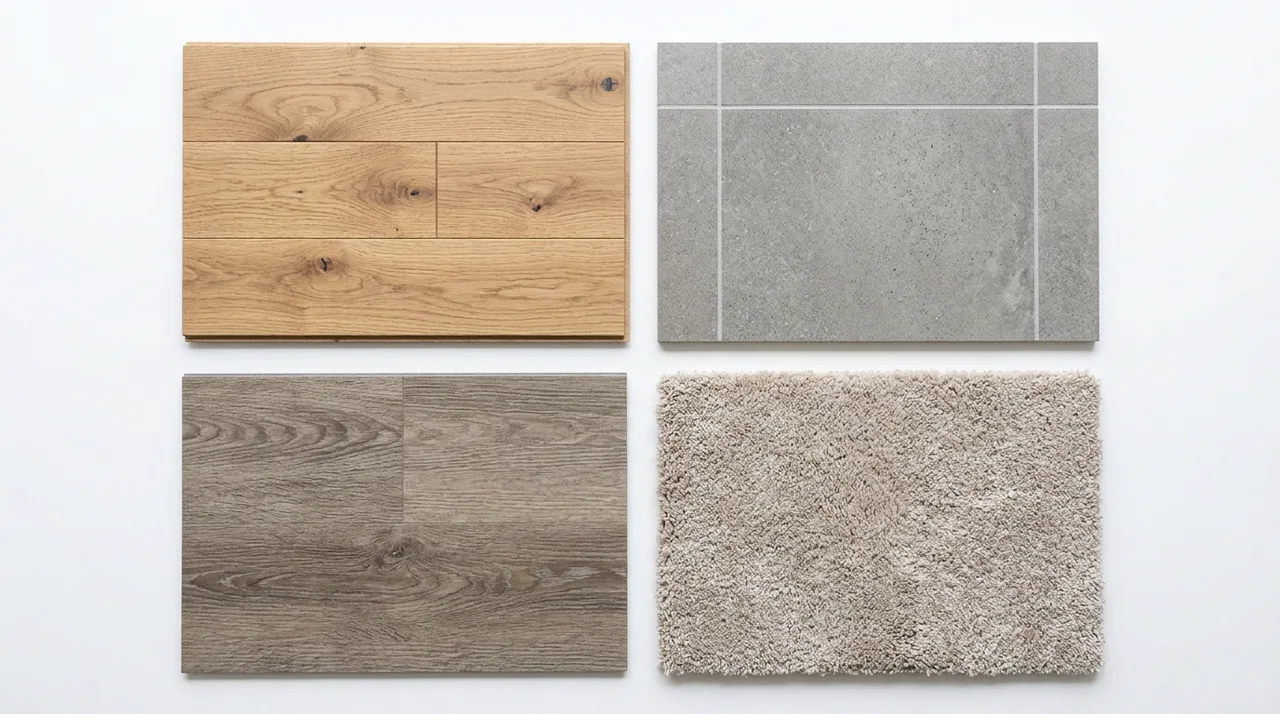
The four most popular flooring types — hardwood (top left), tile (top right), LVP (bottom left), and carpet (bottom right) — each suit different rooms, budgets, and lifestyles.
Tile Flooring: Built for Wet Areas and High Traffic
Ceramic & Porcelain Tile
Tile is the obvious choice for bathrooms, kitchens, mudrooms, and laundry rooms because it's completely waterproof, easy to clean, and virtually immune to the moisture damage that destroys other flooring types over time. Ceramic tile is made from clay fired at lower temperatures and is slightly more porous than porcelain. Porcelain tile is denser, harder, and more water-resistant, making it better for outdoor use and heavy-traffic areas. The installed cost of tile is higher than most other options because it's labor-intensive: the subfloor must be perfectly level, a cement backer board is often required, tiles are set in thinset mortar, and grouting must cure before the floor is usable.
Large-format tiles (24x24 inches or bigger) cost more to install because they require more precise leveling and specialized handling, but they create a more modern look and have fewer grout lines to clean. Heated tile floors (in-floor radiant electric systems) add $8–$15/sq ft to the project but are a luxury that dramatically improves the feel of a cold bathroom floor.
Luxury Vinyl Plank (LVP): The Practical Champion
Luxury Vinyl Plank & SPC Core
If there's one flooring type that has genuinely disrupted the market over the past decade, it's luxury vinyl plank. LVP is a multi-layer synthetic product: a waterproof core (either WPC — wood-plastic composite — or SPC — stone-plastic composite), a realistic printed wood-look layer, and a wear layer on top that determines durability. Modern LVP looks remarkably convincing as hardwood. It's 100% waterproof, significantly warmer and softer underfoot than tile, click-lock installation makes it DIY-friendly, and quality options now carry 20–25-year warranties.
The caveat: LVP is not real wood and doesn't add the same resale premium. It can be scratched by sharp objects and doesn't refinish. However, at $4–$9/sq ft installed versus $10–$22 for solid hardwood, the cost savings are significant — enough that many homeowners are choosing LVP for most of their home and saving hardwood only for the primary living areas.
SPC core is the harder, denser variant and is better for high-traffic areas. WPC core is slightly softer and warmer underfoot. Wear layer thickness matters: 12 mil is standard residential, 20 mil is recommended for families with pets and kids, and commercial-grade products go to 28 mil.
Carpet: Comfort Over Everything
Carpet & Padding
Carpet gets a bad reputation in design circles, but it deserves more credit than it gets. In bedrooms especially, carpet provides warmth underfoot on cold mornings, dramatically reduces noise between floors (important in multi-story homes), provides a softer landing for falls, and creates a cozier atmosphere than hard floors. It's also the most affordable option installed, making it the practical choice for budget renovations, rental properties, and large basement spaces.
The cost of carpet varies enormously by fiber type and pile height. Polyester carpet is the most affordable and stain-resistant but crushes more easily over time. Nylon is the most durable carpet fiber and resists crushing better, costing somewhat more. Wool carpet is a luxury product with exceptional longevity and natural stain resistance. The padding underneath matters as much as the carpet itself — cheap thin padding makes even good carpet feel and perform poorly. Always budget for at least 8 lb density padding, and 10 lb for high-traffic areas.
Room-by-Room Recommendations
The best flooring choice depends as much on the room's demands as on your budget. Here's a practical guide by space:
🏠 Living Room
Hardwood or engineered hardwood for maximum resale value. LVP if budget is a concern or you have pets. Avoid carpet in open-plan living areas.
🍴 Kitchen
Porcelain tile (most durable), LVP (best value), or sheet vinyl. Hardwood is possible but requires vigilant maintenance around water.
🚿 Bathroom
Porcelain or ceramic tile only for wet areas. LVP is acceptable for powder rooms. Never install hardwood, laminate, or carpet in a full bathroom.
🛌 Bedroom
Carpet for warmth and comfort. Hardwood if you prefer hard floors. LVP is a good middle ground if allergies are a concern.
🏗 Basement
LVP is the go-to choice — 100% waterproof and comfortable. Engineered hardwood if conditioned and dry. Never solid hardwood or carpet in a basement with any moisture history.
🚪 Entryway & Mudroom
Porcelain tile or LVP. High durability and easy cleaning are the priorities here. Stone tile is also a strong option for a premium look.
What Drives the Final Price Higher
Subfloor condition. Every flooring type requires a flat, structurally sound subfloor. High spots, low spots, squeaky boards, and damaged sections all need attention before new flooring goes down. Subfloor leveling with self-leveling compound runs $2–$5/sq ft. Replacing damaged OSB or plywood subfloor panels adds $50–$120 per sheet. This is where budgets most often exceed the original quote.
Old flooring removal. Pulling up and disposing of existing tile, hardwood, or carpet adds $1–$3/sq ft to the project. Tile removal is the most labor-intensive (especially if the old thinset bed is thick). Some contractors haul it themselves; others leave a dumpster. Clarify this in the quote.
Stairs. Flooring stairs costs significantly more per linear foot than flat floor areas because of the precision cutting required and the safety considerations. Expect $50–$150 per stair tread and riser for hardwood or LVP, depending on complexity.
Pattern and layout. Standard straight-lay installation is the base price. Diagonal installation adds 10–15% in labor and waste. Herringbone or chevron patterns — increasingly popular with tile and LVP — can add 20–35% to labor costs because of the extra cuts and precision involved.
Furniture moving. Most flooring contractors will move standard furniture as part of the job, but some charge extra or require you to clear the room yourself. Heavy items like pianos, large appliances, and pool tables are almost always excluded. Clarify this before signing.
DIY vs. Professional Installation
Not all flooring types are equal when it comes to DIY feasibility. Here's an honest assessment:
Best for DIY: LVP click-lock and laminate are genuinely beginner-friendly. With decent preparation (watching a few installation videos, renting the right tools), a motivated homeowner can install either type and save $2–$4/sq ft on labor. The main risks are improper expansion gaps and inadequate subfloor prep.
Possible for capable DIYers: Carpet installation requires a power stretcher (rentable) and a knee kicker, both of which take practice. Tile installation is learnable but demands patience with layout, mixing thinset properly, and grouting without smearing. Mistakes in tile work are time-consuming and expensive to fix.
Hire a professional: Solid hardwood installation — especially site-finished hardwood that's sanded and stained after installation — requires specialized tools (floor nailers, drum sanders, edgers) and experience that is genuinely difficult to self-teach. A botched solid hardwood floor can result in $5,000–$10,000 in materials that need replacing.
How to Get an Accurate Quote
Flooring quotes can vary by 30–50% between contractors for the same job. Here's how to compare them fairly:
Get at least three quotes from established local flooring contractors (not big-box store installers, who often subcontract). Make sure each quote specifies: exact material brand and product, square footage being installed, what subfloor prep is included, whether old flooring removal is included, warranty on both materials and labor, and who is responsible for furniture moving. A quote that's vague on any of these points can hide significant add-on costs once work begins.
Ask to see samples of the exact product being quoted — not just a category. The difference between a $2/sq ft LVP and a $5/sq ft LVP is significant in wear layer thickness, rigid core construction, and how it looks and feels underfoot.
Hiring a Flooring Contractor?
Our complete contractor checklist helps you verify licensing, compare bids, and protect your project from start to finish.
Frequently Asked Questions
How much does flooring installation cost per square foot?
Costs vary by material: carpet runs $3–$7 per sq ft installed, LVP $4–$9, laminate $4–$8, tile $7–$18, engineered hardwood $8–$15, and solid hardwood $10–$22 per sq ft installed. Labor is typically 40–60% of the total.
What is the cheapest flooring to install?
Carpet and basic luxury vinyl plank are the most affordable options, both starting around $3–$4 per sq ft installed. Laminate flooring is similarly priced. All three are significantly cheaper than hardwood or tile.
Is it cheaper to install flooring yourself?
DIY can save 40–60% on labor. LVP click-lock and laminate are the most DIY-friendly. Tile requires skill with wet saws and leveling. Solid hardwood installation is best left to professionals since mistakes are costly.
What flooring adds the most home value?
Hardwood flooring delivers the best ROI at resale, with 70–80% cost recovery. Tile in kitchens and bathrooms also performs well. Carpet in main living areas can slightly hurt resale value in competitive markets.
How long does flooring installation take?
A professional crew installs 300–500 sq ft of LVP or laminate per day. Hardwood installation plus finishing takes 2–4 days for a typical room. Tile can take 3–5 days including curing time. Always allow 24–48 hours for flooring to acclimate beforehand.
Do I need to remove old flooring before installation?
In most cases yes. Tile and hardwood always require a clean subfloor. LVP and laminate can sometimes go over existing vinyl if it's flat and stable, but starting fresh is better practice. Old flooring removal adds $1–$3/sq ft to the project.